 Bottle Coolers & Beer Fridges
 Ice Cream Displays
 Ice Cream Machines
 Chest Freezers
 Commercial Freezers
 Commercial Fridges
 Ice Cube Makers and Flakers
 Wine Coolers
 Bain Maries
 Commercial Microwaves
 Commercial Sinks
 Commercial Ovens
 Fryers and Chip Scuttles
 Glass and Dishwashers
 Pie Warmers & Hot Food Displays
 Pizza Ovens
 Water Boilers
 Bar Supplies
 Bowls & Display Baskets
 Cash Registers
 Chafing Dish Sets & Fuel
 Menus & Boards
 Table Numbers & Stands
 Salt, Pepper & Spice Mills
 Crockery
 Cutlery
 Glassware
 Wine Glasses
 Bins
Bins Cleaning Chemicals
 GreasePak
 Janitorial Equipment
 Laundry Equipment
 Coffee Machines
 Juice Dispensers
 Juicers
 Drink Blenders
 Milkshake Blenders
 Slush Machines
 Water Boilers
 Cookware
 Gastronorm Containers
 Ingredient Bins
 Pastry & Baking
 Utensils
 Pizza Pans & Equipment
 Food Storage
 Food Transport & Delivery Bags
 Folding Furniture
 Garden and Outdoor Furniture
 High Chairs
 Chairs
 Tables
Griddles & Hot Plates
Commercial griddles are essential workhorses in professional kitchens across the UK, offering unmatched cooking versatility for restaurants, cafés, and fast food outlets. These flat cooking surfaces—available in electric or gas models with chrome or steel plates—deliver consistent high heat across their entire cooking area, perfect for everything from breakfast service to busy dinner rushes. With temperatures typically ranging from 50-300°C and sizes from compact 400mm to expansive 1200mm units, there's a griddle for every commercial kitchen. After 50 years of kitting out professional kitchens, we've seen how these sturdy appliances complement other equipment like fryers and chargrills to create complete cooking stations that boost both menu variety and kitchen efficiency.
Shop By
-
£575.99 £1,066.00
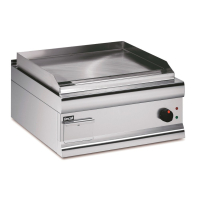
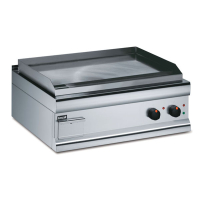
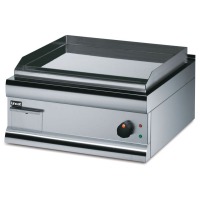
Commercial Electric Griddle | Countertop Steel Plate | 2.7kW Single Zone | Lincat GS6
40kg330H x 600W x 600D mm
13 amp plug fitted
Built-in splash guard for mess-free operation
Steel
 £604.99 £1,121.00
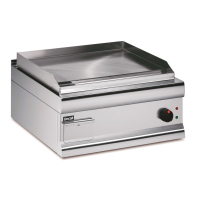
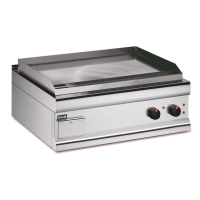
Commercial Electric Griddle | Countertop Steel Plate | 600mm Width | Lincat GS65
39.9kg330H x 600W x 620D mm
Single Phase
Fat drainage channel keeps surfaces free from grease
Steel
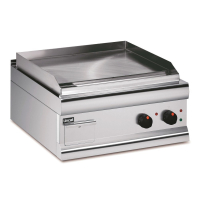
£630.99 £1,169.00Commercial Electric Griddle | Countertop Steel Plate | 600mm | Lincat GS6_T
39.7KG330H x 600W x 620D mm
Single Phase
Hard wearing 12 mm think machined steel plate providing even heat distribution and excellent heat retention
Stainless Steel
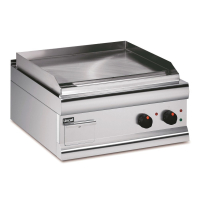
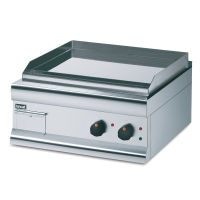
£664.99 £1,232.00Electric Countertop Griddle | Commercial Steel Plate Griddle | Extra Power | Lincat GS6_T_E
39.7KG330H x 600W x 620D mm
Single Phase
Two separately controlled heat zones give you the option of operating either zone independently to provide a smaller cooking area during quiet periods as well as offering versatility when cooking two separate meals simultaneously
Stainless Steel
£693.99 £1,285.00Commercial Electric Griddle | Steel Plate Griddle | Professional Cooking Surface | Lincat GS7
61 KG330H x 750W x 600D mm
Single Phase
12 mm thick machined steel plate
Stainless Steel
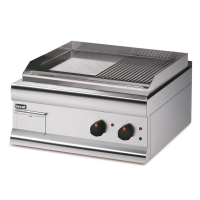
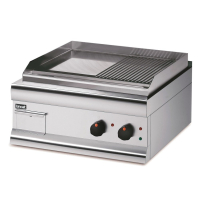
£718.99 £1,332.00Electric Countertop Griddle | Half-Ribbed Plate | Commercial Grill | Lincat GS6_TR
40KG330H x 600W x 620D mm
Single Phase
Two separately controlled heat zones give you the option of operating either zone independently to provide a smaller cooking area during quiet periods as well as offering versatility when cooking two separate meals simultaneously
Stainless Steel
£724.99 £1,342.00Electric Countertop Griddle | Commercial Flat Grill | Extra Power 4.5kW | Lincat GS7_E Silverlink 600
49.7KG330H x 750W x 620D mm
Single Phase
Two separately controlled heat zones give you the option of operating either zone independently to provide a smaller cooking area during quiet periods as well as offering versatility when cooking two separate meals simultaneously
Stainless Steel
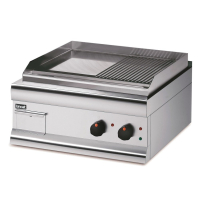
£756.99 £1,401.00Commercial Electric Griddle | Half-Ribbed Countertop Griddle | Extra Power | Lincat GS6_TR_E
40KG330H x 600W x 620D mm
Single Phase
Flexibility of a half smooth, half ribbed plate to give attractive branding lines to your food whilst being able to cook eggs on the smooth half of the plate
Stainless Steel
🎯 Need Help Choosing the Right Griddles & Hot Plates?
Discover how to choose the right model with expert advice on buying considerations, kitchen-tested usage tips, frequently asked questions and real-world chef insights below.
🎧 On the go? Listen to our expert podcast instead
£787.99 £1,459.00Commercial Electric Griddle | Half-Ribbed Countertop Grill | Silverlink 600 Series | Lincat GS7_R
49.2KG330H x 750W x 620D mm
Single Phase
Two separately controlled heat zones give you the option of operating either zone independently to provide a smaller cooking area during quiet periods as well as offering versatility when cooking two separate meals simultaneously
Stainless Steel
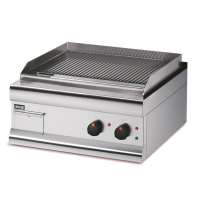
£841.99 £1,559.00Electric Countertop Griddle | Fully-Ribbed Griddle Plate | Commercial Kitchen Equipment | Lincat GS6_TFR
41KG330H x 600W x 620D mm
Single Phase
Two separately controlled heat zones give you the option of operating either zone independently to provide a smaller cooking area during quiet periods as well as offering versatility when cooking two separate meals simultaneously
Stainless Steel
£1,295.99 £2,400.00Commercial Hard Chrome Griddle | 600 x 600mm Electric Griddle | Hard Chrome Plated Cooking Surface | Lincat GS6C
50 KG330H x 600W x 600D mm
Single Phase
Reduced heat radiation into cooking area for comfortable working & lower energy costs
Stainless Steel
£1,415.99 £2,622.00Commercial Electric Griddle | Chrome Plate Griddle | Countertop | Lincat GS6C_T Silverlink 600
41KG330H x 600W x 620D mm
Single Phase
Chrome surface heats up quicker than standard griddles with less energy loss as well as reduced energy radiation, keeping the kitchen cooler for staff and reducing pressure on the ventilation system
Stainless Steel
Commercial Griddles for Restaurants & Fast Food Kitchens
Explore More About Griddles & Hot Plates
Get expert guidance, see real chef stories, and find answers to your most common questions.
Brands Trusted by Industry Professionals
Key Features and Benefits
- Temperature Control Precise heat management from 50-300°C—perfect for diverse menu items.
- Versatile Cooking Handles everything from eggs to steaks on one surface—menu flexibility sorted.
- Durable Construction Heavy-duty stainless steel built for years of commercial kitchen abuse.
- Fast Recovery Maintains temperature even during peak service—no waiting about.
- Even Heat Distribution Eliminates hot spots—consistent results across the entire cooking surface.
- Grease Management Integrated collection troughs—cleaner cooking and easier maintenance.
- Large Cooking Area Accommodates multiple portions simultaneously—perfect for busy periods.
- Long-Lasting Performance Robust components designed for high-volume commercial use.
Too busy to read? Listen instead.
In this episode of The Deep Dive, we explore commercial griddles—perfect for cooking breakfasts, burgers, and more. Learn the differences between smooth vs ribbed plates, gas vs electric models, and what to consider for heat control and durability.
14.20min | Expert-led | Real-world advice
Read Full Podcast Transcript: "Griddles & Hot Plates" 0:00: Welcome to the deep dive.
0:02: Today we're firing up a discussion about a real workhorse in the professional kitchen, the commercial griddle.
0:09: That's right.
0:10: We'll be looking at information from Equipment.com.
0:13: They've got product listings, descriptions.
0:16: Some expert insights too.
0:17: It gives a really good picture actually.
0:19: Absolutely, yeah, we've kind of sifted through quite a bit there, the different models, what you need to think about when choosing one, how they actually work, and you know why they're just so vital.
0:30: Our goal today is, I think, to give you a clear understanding of these.
0:34: Things their versatility, the key features, and what really matters when you're picking one out for a professional kitchen, just the essentials really without getting bogged down.
0:43: OK, let's unpack that.
0:44: So when we say commercial griddle, what are we actually talking about?
0:47: How's it different from, I don't know, the pan I might use at home?
0:50: Yeah, good question.
0:52: Think about your home griddle, but then sort of amplify everything, the build quality, the heating power.
0:58: A commercial griddle is basically a heavy duty flat cooking surface.
1:01: It's engineered for consistent high heat right across the whole plate.
1:06: And it has to do that reliably day after day, especially here in the UK, you find them everywhere in almost any pro kitchen.
1:12: Pretty much.
1:13: Restaurants, cafes, fast food joints, you name it, they come in electric or gas versions, and the plate itself, the cooking surface, is usually tough chrome or steel, built for heavy use, and the temperature range is way beyond your stovetop, typically something like 50 up to maybe 300 °C.
1:31: Wow, 300 degrees.
1:33: That does give you flexibility.
1:34: And what about size?
1:36: Do they very much?
1:37: Oh yeah, quite a bit.
1:38: You can get compact ones, maybe 400 millimeter wide, good for smaller places, or they go right up to these big expansive 1200 millimeter units for serious high volume cooking.
1:48: And what's.
1:48: Interesting is how they fit into the kitchen line.
1:51: Well, they often work alongside other kits like fryers or char grills.
1:55: It creates a really efficient setup, a good griddle, honestly, it lets you do so much more with your menu and just speeds everything up.
2:02: It's more than just a hot plate, it's a productivity tool.
2:04: So it sounds like picking the right one involves a bit more thought.
2:08: There's quite a variety then.
2:09: What kinds are out there?
2:10: Oh, the variety is huge.
2:12: It really depends on what you need and your kitchen space.
2:15: You've got electric countertop models, different widths, sometimes single or double plugs, which helps with placement.
2:23: Though looking at the easy equipment listings, some popular ones are actually out of stock right now.
2:28: Shows how popular they are, I guess.
2:30: Then there are gas griddles.
2:31: You can get them for LPG bottles or Or mains natural gas.
2:36: Often they have multiple burners you can control separately for different heat zones.
2:40: Exactly, really useful, and some are specifically labeled heavy duty for the toughest kitchens.
2:46: So each type must have its own pros and cons, definitely.
2:50: And beyond just gas or electric, you see things like combination griddles.
2:54: What are those half flat, half ribs, so you can get those nice grill marks on stakes or whatever, but still have a.
2:59: section for eggs or pancakes.
3:01: Clever.
3:02: Yeah, it is useful.
3:04: There are even outdoor ones running on propane for catering or pubs with beer gardens, and power output varies a lot to wattage for electric, BTU for gas.
3:14: More power usually means faster heat up, faster recovery.
3:18: Right, recovery time must be crucial during a rush.
3:20: It is, and plate thickness matters too, anywhere from Say 8 millimeter up to 12 millimeter.
3:27: Thicker plates hold heat better, more evenly, fewer hotspots.
3:31: OK.
3:32: You also get hard chrome griddles.
3:33: We can talk more about their benefits later and things like clam griddles, clam griddles, yeah, they have a heated top plate as well, flat or ribbed, cooks from both sides at once, super fast.
3:43: Think burgers and a busy takeaway.
3:45: I see.
3:46: Speeds things right up, totally, and you can get them on stands, different sizes.
3:50: gas, electric, some even have refrigerated bases built in.
3:53: Wow, storage right underneath.
3:55: Handy, very.
3:56: And for smaller places, there are even griddle toasters doing two jobs in one.
4:00: That's quite the lineup, and easy equipment seems to list a lot of the big names.
4:04: Yeah, they do.
4:05: You see brands like Modena, Eazy, Blaze, Buffalo, L Lincat, Perry, Blizzard, Blue Seal, Cobra, Free Free, all pretty well-known, reputable names in the industry.
4:16: Gives you confidence.
4:17: OK, so we understand what they are, the huge variety.
4:19: Let's dig into the why.
4:21: What are the actual key features and benefits that make them so essential in a pro kitchen?
4:26: Well, several things stand out.
4:27: First, that precise temperature control we mentioned, that 50 to 300 c range, that's absolutely vital for cooking different things perfectly.
4:35: Then there's just the sheer versatility.
4:37: You can go from delicate eggs to searing steaks on the same.
4:41: Surface, maybe not at the exact same time without cleaning, but you get the idea.
4:45: They're built tough.
4:46: Usually heavy duty stainless steel, they have to withstand constant use in a busy kitchen.
4:51: Durability is key.
4:52: Absolutely, and fast recovery.
4:54: When you slap a load of cold burgers on, you need it to get back up to temperature quickly.
4:58: No delays.
4:59: And I guess you don't want half-cooked food because of hot and cold patches.
5:02: Exactly.
5:03: Even heat distribution is crucial for consistent results.
5:06: No one wants that.
5:08: Plus good grease management.
5:10: How does that work?
5:10: Usually there's a trough or channel at the front to collect grease and bits, keeps the surface cleaner during service, and makes cleanup easier later.
5:19: The large cooking area on many models lets you cook multiple orders at once.
5:23: Huge time saver during busy periods, and fundamentally they're built to last.
5:28: Good components designed for continuous high volume work.
5:32: It's an investment.
5:33: OK, so if someone's thinking, right, I need one of these.
5:36: What are the absolute must-now buying considerations?
5:41: How do they make a smart choice and not regret it?
5:43: Good question.
5:44: There are a few critical things.
5:45: First is size and capacity.
5:47: You absolutely have to measure your space, counter space, floor space.
5:51: Remember they range from maybe 400 millimeters wide up to 1200 millimeter.
5:54: Great.
5:55: And think about your busiest time.
5:57: How much food do you need to churn out per hour?
5:59: A rough guide people use is about 300 millimeters of width for every, say, 15 to 20 portions per hour.
6:05: OK, that's a useful benchmark.
6:06: And don't overlook plate thickness.
6:09: We mentioned it, but minimum 10 millimeters is a good recommendation.
6:13: Thicker plates mean better heat retention, more even heat, just more consistent cooking overall.
6:19: Makes sense.
6:19: What about powering it, gas or electric?
6:22: The pros and cons.
6:23: That's the next big one.
6:25: Power source and specs.
6:26: Gas usually heats up faster, reacts quicker when you adjust the dial.
6:30: Big plus in a rush, but you need proper ventilation, which can be more complex and costly to install.
6:36: Electric models often give you more precise, stable temperature control, good for delicate stuff.
6:42: They fit easily into all electric kitchens, maybe simpler installation if the wiring's there.
6:47: And then there's the surface material again.
6:50: Chrome versus steel.
6:51: So chrome costs more upfront.
6:53: Yes, higher initial cost, but it's generally more heat efficient, uses less energy maybe, and definitely easier to clean, much smoother surface than steel.
7:01: Steel is cheaper to buy initially, and some chefs like how you can season it over time, build up a sort of natural non-stick layer, but it needs more careful cleaning to stop rust and sticking.
7:11: We're getting a really clear picture now.
7:12: But let's get into the mechanics slightly.
7:14: How do they actually work?
7:15: What's the basic principle?
7:17: It's pretty Straightforward actually, but effective.
7:19: You've got that flat metal plate, steel or chrome, and it's heated evenly from underneath.
7:25: With gas you've got burners placed strategically under the plate, like powerful hob burners, basically.
7:32: Electric ones use heating elements kind of like in an oven, but they're right up against the bottom of the griddle plate for good heat transfer.
7:39: So that creates the consistent cooking surface exactly across that whole 50 to 300 c range.
7:46: Temperature control on electric is usually via thermostats.
7:49: They switch the elements on and off.
7:50: On gas models, it's adjustable gas valves.
7:53: You control the flame intensity manually.
7:55: And with all that cooking, you mentioned grease management earlier.
7:59: How does that slope work?
8:00: Oh yeah, most are designed with a very slight slope, usually towards the front, just subtle, very subtle.
8:07: But enough so that grease, oil, little food bits naturally run down into that trough or collection pan at the front.
8:13: Keeps things tidier, much tidier, reduces flare-ups, burnt bits, makes cleaning way easier, and it's that direct heat transfer from the plate that gives you the great searing and browning.
8:24: Plus, the big surface means Cooking lots at once.
8:28: That's the efficiency driver.
8:30: Now Easy Equipment had some comments from industry experts, didn't they?
8:33: Oliver Bennett and Mike, what were their main takeaways?
8:36: Yeah, Oliver Bennett, he's got over 10 years' experience.
8:39: He calls riddles the unsung heroes of fast-paced kitchens.
8:43: I like that.
8:44: He really stresses getting one with even heat.
8:46: He says it's critical for quality whether it's burgers or a full breakfast.
8:50: You don't want inconsistency.
8:52: His advice Investing quality from the start.
8:55: It saves time, energy, and cleaning headaches down the line.
8:58: Sounds like solid advice.
9:00: What about Mike?
9:01: He had even more experience, right?
9:02: Yeah, Mike, 25 years in the industry.
9:04: He completely agrees.
9:06: He says a quality griddle is the backbone of any busy kitchen.
9:09: Backbone strong word.
9:11: It is.
9:12: He argues the right model isn't just about cooking, it saves time, energy, cuts down on maintenance issues, and lets you offer more on your menu.
9:20: Both of them really highlighted the versatility, the durability, the high volume capability.
9:25: The main downside they both mentioned.
9:27: Let me guess, cleaning exactly.
9:30: Regular, thorough cleaning and maintenance are essential.
9:33: That's why they recommend models with easy access grease trays and smooth surfaces, makes that chore less painful.
9:40: OK, so given all this, who really needs one?
9:42: Which businesses find them indispensable?
9:44: Oh, a huge range really.
9:46: Cafes and breakfast places perfect for eggs, pancakes, hash browns, especially during that morning rush.
9:52: Definitely.
9:53: Hotels use them constantly because their menus are so varied.
9:56: Breakfast, lunch, dinner, the griddle handles a lot.
9:59: Fast food, absolutely essential, burgers, breakfast muffins, sandwiches, high volume, consistent cooking, can't really do it without them.
10:07: Even food trucks, they often go for compact models because space is tight, but they get so much versatility from that one piece of kit.
10:14: It's interesting how useful they are across the board, and there was that real world example of the cafe in Birmingham.
10:20: Yes, that was a great case study.
10:22: They were struggling with their breakfast service, slow, inconsistent.
10:26: They upgraded to a 900 millimeter griddle, used it alongside their combi oven, and apparently they doubled their breakfast covers, doubled, without more staff.
10:35: Wow, just from the equipment change.
10:37: Seems so.
10:38: The bigger, better griddle let them cook eggs, pancakes, everything simultaneously and consistently.
10:44: The owner said it made the mornings much less chaotic, much less stressful.
10:48: That really shows the impact.
10:50: OK, I bet listeners have some specific questions.
10:53: Let's tackle some FAQs.
10:55: Chrome versus steel.
10:56: Can we summarize the main difference again?
10:58: Sure, Chrome.
11:00: Generally better heat efficiency, heats evenly, much easier to clean, less sticking.
11:05: But higher initial cost, OK, and steel, steel, more affordable upfront can be seasoned to build up a non-stick surface.
11:12: Some chefs like that, but needs more careful cleaning and maintenance to prevent rust and sticking.
11:16: Got it.
11:17: Heat up times.
11:18: How quick are we talking?
11:19: Gas versus electric.
11:20: Generally, gas is quicker, maybe 10 to 15 minutes to get to temperature.
11:25: Electric takes a bit longer, usually 15 to 20 minutes, but that helps the heat really evenly.
11:30: OK.
11:31: And cooking different things at once like bacon and pancakes, is that really feasible?
11:35: Definitely.
11:35: That's a big advantage.
11:37: The key is using temperature zones.
11:39: , setting different parts of the griddle to different heats.
11:42: Exactly.
11:43: On larger models or ones with multiple controls, you can have one area hotter for bacon, another cooler for pancakes, just manage the zones.
11:51: Smart and maintenance.
11:53: What does that involve day to day?
11:54: Daily cleaning is crucial.
11:56: Scrape it down, to grease it after service.
11:58: If it's steel, you need to season it regularly with oil to keep it nonstick and prevent rust.
12:03: The longer term.
12:04: Professional checks every 6 to 12 months are a really good idea.
12:07: Make sure everything's working safely and correctly.
12:09: Catch problems early.
12:10: Makes sense.
12:11: Quick recap on gas versus electric advantages.
12:14: OK.
12:14: Gas, faster heat up, quick response, electric, often more precise, consistent temperature control.
12:21: The best choice depends on your kitchen, menu, and what you prefer.
12:25: Right.
12:25: And finally, installation.
12:27: Can businesses just plug these in?
12:28: Smaller countertop electric ones with standard plugs, usually, yeah, pretty straightforward.
12:34: But the bigger ones.
12:36: Or gas.
12:37: Definitely needs professional installation, especially gas.
12:42: You need qualified engineers to connect it safely and make sure it meets all the codes.
12:46: Not a DIY job for gas ever.
12:49: Absolutely critical point.
12:50: OK, so just to quickly pull together the key benefits we've covered.
12:53: Yeah, we've seen they enhance flavor.
12:55: Sering keeps juices in.
12:56: They boost service efficiency.
12:58: Cooking multiple things at once means faster service, faster turnover.
13:02: Exactly.
13:03: And things like zoned heating help optimize energy use, potentially saving costs, right.
13:08: And now for our did you know bit.
13:10: Any surprising facts pop out from the research.
13:13: A few interesting ones.
13:14: Speed, some high output griddles can apparently cook up to 150 burgers an hour.
13:19: Wow.
13:19: Durability with good care, they can last 7 to 10 years, even in tough kitchens.
13:24: Versatility one griddle can often do the job of several other appliances, saving valuable space.
13:28: It's a big one in small kitchens.
13:30: Huge and efficiency that chrome surface, it can be up to 30% more energy efficient than steel because it transfers heat so well.
13:37: 30% is significant.
13:39: OK, so as we wrap up this deep dive, I think it's really clear, isn't it?
13:43: Commercial griddles aren't just flat tops.
13:45: They're really a central vital piece of kit for any efficient, versatile, and profitable professional kitchen.
13:54: So whether you're setting up a new place or just trying to improve your current kitchen, they can carry.
13:59: Carefully about the right griddle, its features, its capabilities could genuinely change how you prep and serve food.
14:06: It impacts speed, consistency, which you can even offer on the menu.
14:09: Exactly.
14:10: The details we've gone through today hopefully give a good sense of that potential.
14:13: better speed, better consistency, more menu flexibility.
14:16: So thinking about your own situation, what possibilities does all this spark for you?
Essential Buying Considerations
Size and Capacity
- Measure your counter space carefully—griddles range from 400mm to 1200mm wide.
- Consider your busiest service period—allow 300mm width per 15-20 portions per hour.
- Check plate thickness—minimum 10mm ensures better heat retention and distribution.
Power Source and Specifications
- Gas models offer faster heating but need proper ventilation systems.
- Electric versions provide more precise temperature control—pair with combi ovens.
- Chrome surfaces cost more initially but offer better heat efficiency and easier cleaning.
How Commercial Griddles Work
Commercial griddles operate on a brilliantly simple principle—a flat metal cooking surface (typically steel or chrome) heated evenly from below by powerful gas burners or electric elements. This creates a consistent cooking plane that reaches temperatures between 50-300°C, controlled via precision thermostats in electric models or gas valves in gas versions. Most feature a slightly sloped surface directing oils and fats toward a front grease trough for cleaner cooking and easier maintenance. The large flat surface allows for direct heat transfer to your food, creating that perfect sear on burgers or golden finish on pancakes while accommodating multiple portions simultaneously—perfect for pumping out breakfast orders or keeping up with the dinner rush!

Trusted Insights from Oliver Bennett

Commercial Catering Equipment Specialist
12+ years experience
"Griddles are the unsung heroes of fast-paced kitchens—get one with even heat distribution and you'll smash out burgers, breakfasts, and more without breaking a sweat. Trust me, investing in a quality commercial griddle saves you time, energy, and a whole lot of cleaning grief down the line."Safety Guidelines
- Check Surfaces Inspect for cracks or damage—prevents food contamination.
- Secure Positioning Ensure level installation—prevents oil runoff accidents.
- Avoid Overcrowding Leave space between items—reduces grease splatter.
- Use Proper Tools Heat-resistant spatulas and tongs—prevents burns.
- Safe Shutdown Turn off after service—prevents accidental burns.
- Check Connections Regular gas/electric inspection—ensures safe operation.
Top Tips for Using Commercial Griddles
To get the most from your commercial griddle, always preheat for 15-20 minutes before the first service to ensure even cooking temperatures across the plate. Season steel surfaces regularly with oil to maintain a natural non-stick quality, and clean while still warm (not hot) using a scraper and griddle stone. For chrome plates, avoid metal utensils that can scratch the surface. Keep the grease trough clear during service to prevent overflow, and remember that different foods require different cooking zones—use the cooler edges for holding finished items.
Benefits of Using Commercial Griddles
- Flavour Enhancement Retains natural juices—tastier food and satisfied customers.
- Service Efficiency Cooks multiple items at once—speeds up table turnover.
- Energy Optimisation Zoned heating options—reduces running costs during quieter periods.
Did You Know?
- Speed Commercial griddles can cook up to 150 burgers per hour—perfect for busy venues.
- Durability Quality griddles last 7-10 years in commercial settings with proper care.
- Versatility One griddle replaces multiple specialist cooking appliances—space saver.
- Efficiency Chrome surfaces can reduce energy consumption by up to 30% versus standard steel.

Expert Insights on Commercial Griddles
After half a century in the business, we've seen griddles evolve tremendously. 'A quality griddle is the backbone of any busy kitchen,' says Mike, our equipment specialist with 25 years in the trade. 'The right model won't just cook well—it'll save you time, energy, and maintenance headaches while boosting your menu options.'
- Pros: Versatile, durable, high-volume cooking capability.
- Cons: Requires regular cleaning and maintenance—choose models with easy-access grease trays.
Who Needs Commercial Griddles?
- Cafés & Breakfast Spots Perfect for eggs, pancakes, and hash browns—morning service sorted.
- Hotels Handles diverse breakfast-to-dinner menu items with ease.
- Fast Food Restaurants Smashes out high-volume burger and sandwich orders quickly.
- Food Trucks Compact models maximise limited space—versatile cooking solution.

Real-World Success with Commercial Griddles
A bustling breakfast café in Birmingham was struggling with slow service and inconsistent cooking results using traditional methods. After upgrading to a 900mm commercial griddle from us, paired with their existing combi oven, their entire operation transformed. 'We've doubled our breakfast covers without adding staff,' the owner shares. 'The griddle's massive surface lets us cook everything from perfect eggs to golden pancakes simultaneously—our morning rush is no longer a panic!'
FAQs
- What's the difference between chrome and steel griddles? Chrome offers better heat efficiency and easier cleaning, while steel is more affordable and seasons naturally over time.
- How long do commercial griddles take to heat up? Gas models reach temperature in 10-15 minutes, while electric versions typically need 15-20 minutes for even heat.
- Can I cook different foods simultaneously? Absolutely—use temperature zones for managing different items requiring various heat levels.
- What maintenance do griddles require? Daily cleaning, regular seasoning for steel plates, and professional service checks every 6-12 months.
- Gas or electric—which is better? Gas offers faster heating and recovery; electric provides more precise temperature control—choose based on your kitchen setup.
- How difficult is installation? Countertop models plug in easily; built-in versions require professional installation to ensure safety compliance.
Looking for Equipment by Business Type?
Not sure where to start? Whether you're running a bustling café, opening a pizzeria, or managing a school canteen, we've made it easy to shop by business type. Explore handpicked equipment bundles and essentials tailored to your industry—saving you time and making sure you get exactly what you need.
Other Categories You Might Find Useful
We’ve selected some closely related categories that might be essential for your setup. Whether you’re expanding your kitchen or just making sure you’ve got everything covered, these links will help you explore more equipment that fits your needs.
Commercial Grill Cleaners for Restaurants & Kitchens Commercial Grills for Restaurants & Professional Kitchens Commercial Hand Brushes for Kitchens & Food Preparation Commercial Hand Held Electronic Probes for Food Safety & Temperature Control Commercial Cooking Thermometers for Kitchens & Catering Commercial Kitchen Gloves for Food Safety & Handling Commercial Chopping Boards for Professional Kitchens & Restaurants Commercial Kitchen Funnels for Food Preparation & Liquid TransferWhat our Customers Say
'Our griddle hasn't missed a beat in two years of non-stop service!'
J James Head Chef, The Grill House, Leeds'Best kitchen investment we've made—versatile and built like a tank!'
L Laura Café Owner, Bristol Brunch Co., Bristol
Why Choose EasyEquipment for Commercial Griddles?
- Trusted Supplier 50 years selecting premium griddles—we know what lasts in busy kitchens.
- Fast Delivery UK-wide service—have your griddle up and running quickly.
- Best Price Promise Found it cheaper? We'll match it—quality without the markup.
- Expert Support Talk to specialists who understand commercial kitchens—not just salespeople.
Ready to Explore Commercial Griddles?
Browse our complete range of professional griddles for every kitchen size and requirement. With our expertise behind you and fast UK delivery, your kitchen upgrade is just a click away—find your perfect griddle today!