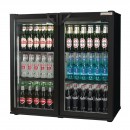
 Bottle Coolers & Beer Fridges
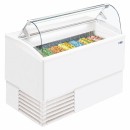 Ice Cream Displays
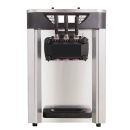 Ice Cream Machines
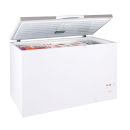 Chest Freezers
 Commercial Freezers
 Commercial Fridges
 Ice Cube Makers and Flakers
 Wine Coolers
 Bain Maries
 Commercial Microwaves
 Commercial Sinks
 Commercial Ovens
 Fryers and Chip Scuttles
 Glass and Dishwashers
 Pie Warmers & Hot Food Displays
 Pizza Ovens
 Water Boilers
 Bar Supplies
 Bowls & Display Baskets
 Cash Registers
 Chafing Dish Sets & Fuel
 Menus & Boards
 Table Numbers & Stands
 Salt, Pepper & Spice Mills
 Crockery
 Cutlery
 Glassware
 Wine Glasses
 Bins
Bins Cleaning Chemicals
 GreasePak
 Janitorial Equipment
 Laundry Equipment
 Coffee Machines
 Juice Dispensers
 Juicers
 Drink Blenders
 Milkshake Blenders
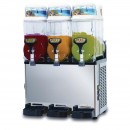 Slush Machines
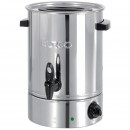 Water Boilers
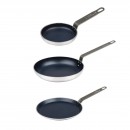 Cookware
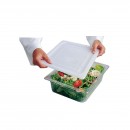 Gastronorm Containers
 Ingredient Bins
 Pastry & Baking
 Utensils
 Pizza Pans & Equipment
 Food Storage
 Food Transport & Delivery Bags
 Folding Furniture
 Garden and Outdoor Furniture
 High Chairs
 Chairs
 Tables
Blast Chillers & Blast Freezers
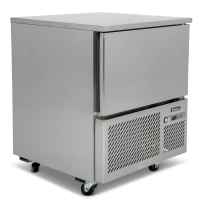
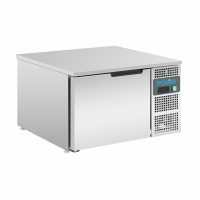
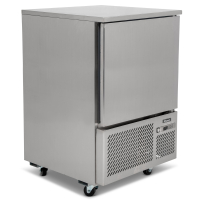
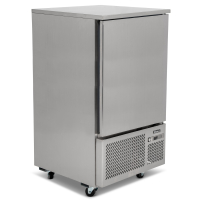
Commercial blast chillers and freezers are game-changers for serious UK kitchens needing to cool food rapidly and safely. These professional rapid cooling systems take hot dishes from 70°C down to 3°C in just 90 minutes, preserving quality while meeting strict food safety regulations. With power ratings typically between 1-3kW and constructed from commercial-grade stainless steel, they're built to handle the demands of busy restaurant service. They pair brilliantly with combi ovens and sous vide equipment for a complete cook-chill system. After 50 years kitting out professional kitchens, we've seen how proper blast chilling transforms food quality and kitchen efficiency!
We Recommend

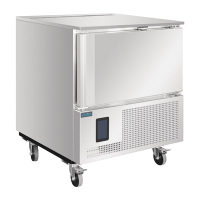
Commercial Blast Chiller | Countertop Blast Freezer | 8kg/5kg Capacity | King 3BLC
- Refrigerant R290
- 2/1 GN compatible interior for rapid filling and access
- Easy-clean construction
- User-friendly digital temperature controls and display
- Solid self-closing door
-
 £1,719.99 £2,559.00
Commercial Blast Chiller Freezer | 20kg/15kg Capacity | Stainless Steel | Blizzard BCF20-HC
1161000H x 800W x 800D mm
Blizzard
Automatic vaporisation of condensate
Stainless Steel
£2,138.29 £3,207.43Commercial Blast Chiller | Countertop Shock Freezer | 8/5kg Capacity | Polar CK640
52.05420H x 660W x 650D mm
13 amp plug fitted
33 Litre
Stainless Steel
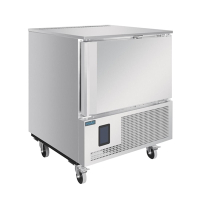
£2,432.68 £3,510.00Commercial Blast Chiller | Countertop Blast Freezer | 8kg/5kg Capacity | King 3BLC
42kg430H x 660W x 650D mm
13 amp plug fitted
33 Litre
Stainless Steel
£2,578.99 £3,838.00Commercial Blast Chiller Freezer | Rapid Cooling Unit | 40kg/28kg Capacity | Blizzard BCF40-HC
1391520H x 800W x 800D mm
Blizzard
Automatic vaporisation of condensate
Stainless Steel
£3,393.99 £5,090.61Commercial Blast Chiller Freezer | Rapid Cooling Unit | 5 Tray Capacity | Afinox FASTER 5/5-P
850H x 760W x 700D mm
13 amp plug fitted
Freezing: 10 kg
Shelves: 5 x GN1/1 or 5 EN 60×40
£3,598.99 £5,356.00Commercial Blast Chiller Freezer | 60kg/38kg Capacity | Stainless Steel | Blizzard BCF60-HC
1821780H x 800W x 800D mm
Blizzard
Automatic vaporisation of condensate
Stainless Steel
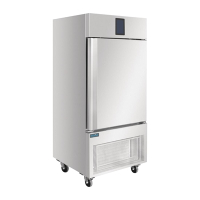
£4,197.87 £6,296.81Commercial Blast Chiller | Rapid Cooling System | 12/8kg Capacity | Touchscreen Controller | Polar U-Series UA014
123965H x 804W x 826D mm
Polar
Includes food probe for accurate readings
Reliably chills from 70CC to 3CC in 90mins
£4,919.39 £7,379.09Commercial Blast Chiller | Rapid Cooler | 18/14kg Capacity | Touchscreen Control | Polar U-Series UA015
1035H x 804W x 826D mm
Polar
Includes food probe for accurate readings
Chills from 70CC to 3CC in 90mins
🎯 Need Help Choosing the Right Blast Chillers & Blast Freezers?
Discover how to choose the right model with expert advice on buying considerations, kitchen-tested usage tips, frequently asked questions and real-world chef insights below.
🎧 On the go? Listen to our expert podcast instead
£5,772.08 £8,658.12Commercial Blast Chiller | Rapid Cooling System | 40/28kg Capacity | Touchscreen Controller | Polar U-Series UA016
1901885H x 800W x 815D mm
Polar
1/1 GN compatible - quickly transfer pans between stations (shelves sold separately)
Easily programmable for custom, consistent chilling routines
Commercial Blast Chillers & Freezers for Restaurants & Catering
Explore More About Blast Chillers & Blast Freezers
Get expert guidance, see real chef stories, and find answers to your most common questions.
Brands Trusted by Industry Professionals
Key Features and Benefits
- Rapid Cooling Technology Chills hot food to 3°C in just 90 minutes—essential for food safety.
- Temperature Control Precise digital controls for perfect results every time.
- HACCP Compliance Built-in monitoring ensures food safety regulations are met.
- Quick Freezing Capability Drops to -18°C within 4 hours—preserves food integrity.
- Food Quality Preservation Maintains texture, nutrients and flavour during rapid chilling.
- Multiple Programs Customisable cycles for different food types—versatile kitchen assistant.
- Touch Controls Easy-to-use interfaces make operation simple for all staff.
- Energy Efficiency Smart technology uses less power—cost-effective running.
Too busy to read? Listen instead.
In this episode of The Deep Dive, we explore how blast chillers and blast freezers can transform food safety, efficiency, and shelf life in professional kitchens. Whether you're a chef, restaurant owner, or catering pro, discover how these essential tools help you meet HACCP standards, reduce waste, and optimize prep times. Tune in for expert insights and real-world use cases from the foodservice industry.
13.41min | Expert-led | Real-world advice
Read Full Podcast Transcript: "Blast Chillers & Blast Freezers" 0:00: Welcome to the deep dive.
0:02: This is where we take something a listeners asked about, grab some solid info, and we'll, boil it down for you, give you that quick, thorough understanding.
0:10: Exactly.
0:10: And today, we're tackling commercial blast chillers and freezers, you know, those machines humming away in pro kitchens.
0:18: Right?
0:18: Someone saw one in a documentary and got curious, and we thought, yeah, let's get into that.
0:22: Our info comes from easy equipment.
0:24: They're UK based suppliers of restaurant gear, and they've been doing this for like 50 years.
0:31: So they know their stuff.
0:32: Yeah, seems like a good source.
0:34: So our mission today really is to figure out what these things are, how they work, the big advantages, you know, safety, efficiency, saving money.
0:43: Who actually needs them and what you need to think about if you're considering one.
0:47: Definitely.
0:47: We're hoping for a few aha moments for you, especially around, well, food safety and just making a kitchen run smoother.
0:54: OK, let's jump in.
0:55: In simple terms, what is a blast chiller or freezer?
0:59: Basically, they're super powerful cooling systems.
1:01: Their whole job is to get cooked food cold, fast.
1:05: And safely.
1:06: Fast is the key word, right?
1:07: How fast are we talking?
1:08: Really fast.
1:09: Like taking food from piping hot, say 70 °C, down to a safe fridge temp.
1:15: 3 °C in just 90 minutes.
1:17: 90 minutes.
1:19: Wow.
1:19: And for freezing, they can hit-18 °C in about 4 hours.
1:23: That speed is the whole point.
1:25: OK, 90 minutes hot to cold.
1:26: That's way quicker than just sticking it in a normal fridge.
1:30: How is it different technology wise?
1:31: Oh, completely different.
1:33: Your standard fridge cools gently, slowly.
1:36: Blast chillers use really powerful fans and heavy duty cooling systems.
1:41: So it's like focused cold air blasted at the food.
1:44: Exactly, high velocity forced cold air circulation all around it.
1:47: It's intense, a blizzard in a box like you said.
1:49: OK, but why?
1:50: Why the need for speed?
1:51: What's the main benefit?
1:52: Food safety number one.
1:54: It dramatically cuts down the time food spends in the danger zone.
1:57: , the danger zone, that temperature range where bacteria just love to multiply.
2:01: Precisely, usually between about 8 degrees and 63 °C, blast chillers push the food through that zone so quickly that the bacteria barely get a chance to grow.
2:11: Exactly.
2:12: It drastically reduces the risk of foodborne illness.
2:15: It's a huge deal for compliance and safety.
2:17: Makes total sense.
2:19: Safety first.
2:20: What about the freezing side?
2:21: Why freeze so fast?
2:22: Does it matter?
2:23: It matters a lot for quality.
2:25: Rapid freezing creates tiny ice crystals, microcrystals.
2:28: OK.
2:29: And why are tiny crystals better?
2:31: Because large ice crystals, the kind you get from slow freezing, actually damage the food's structure.
2:37: They puncture cell walls.
2:38: , so that leads to mushiness when it thaws.
2:42: You got it.
2:42: Microcrystals cause much less damage, so the food keeps its texture better, and its nutrients, and importantly its flavor.
2:49: It protects the quality.
2:51: Right, preserving the integrity of the food.
2:52: These sound pretty sophisticated.
2:54: Any other techie bits like special features?
2:57: Yeah, many have multiple temperature probes, not just one but several, so you can check the core temperature accurately right in the middle of the food.
3:04: Ensures it's chilled all the way through, not just the outside.
3:06: Exactly.
3:07: And you often get programmable cycles, so you can set specific cooling routines for different types of food dense casseroles versus, say, delicate fish.
3:15: Smart, not just an on off switch.
3:17: It sounds like it gives you a lot more control.
3:19: It really does.
3:20: It's about precision cooling.
3:21: You know, hearing about how quickly it chills, it's almost like It stops time for the food.
3:26: That's a great analogy.
3:27: It's like hitting the pause button on freshness.
3:30: You cook it, you blast, chill it, and boom, its quality is locked in for longer.
3:34: Pausing freshness, I like that.
3:36: OK, so this leads into the bigger benefits, right, beyond just the immediate cooling.
3:41: Absolutely.
3:42: We've touched on food safety compliance, meeting those ETA standards, Environmental health officer requirements, yeah, keeping them happy is key, and many units help with HACCP compliance to that hazard analysis system.
3:55: They often have built-in monitoring, data logging, basically proof that you're doing things right, less paperwork, fewer headaches, good stuff.
4:03: What else?
4:03: We mentioned quality preservation, right?
4:06: Because of those microcrystals and the rapid chill, the texture, nutrients, flavor, they're all maintained much better than with slow cooling or freezing.
4:15: Your food tastes like it should, which means happier customers, repeat business.
4:20: Makes sense.
4:21: What about the bottom line?
4:22: Is there a financial angle?
4:24: Oh, definitely.
4:24: A huge one is reduced food waste, because blast chilling extends shelf life so effectively.
4:31: How much longer are we talking?
4:33: Potentially 5 to 7 days longer shelf life compared to just putting it in a normal fridge.
4:38: And some figures suggest kitchens can cut food waste by up to 30%.
4:42: 30%.
4:42: That's, that's massive.
4:44: That could be thousands saved over a year, easily.
4:47: It adds up incredibly quickly.
4:49: And then there's kitchen efficiency.
4:50: How does it help there?
4:51: It enables proper batch cooking.
4:53: You can cook large amounts during quiet times, chill or freeze it perfectly, and then regenerate it, reheat it safely and quickly when you get slammed.
5:00: So less pressure during peak service.
5:03: Prep ahead, serve faster.
5:04: Exactly.
5:05: streamlines the whole workflow.
5:06: It can genuinely cut down on kitchen labor hours needed, especially during those busy rushes.
5:11: Less stress, maybe fewer staff needed during peak times.
5:14: I can see how that saves money too.
5:15: Any other uses, anything unexpected.
5:18: Yeah, they're pretty versatile, great for pastry chefs, rapidly cooling creams, setting things, and even tempering chocolate.
5:26: Getting that perfect shine and snap requires precise fast cooling.
5:30: Tempering chocolate.
5:31: OK, that's cool.
5:32: So it really sounds like these aren't just regulatory boxes to tick.
5:35: They can actually change how a kitchen works for the better.
5:38: Totally.
5:39: The savings from less waste, plus the efficiency gains.
5:43: They often mean the machine pays for itself surprisingly fast.
5:47: OK, so let's say someone listening is starting to think this might be for them.
5:51: What are the key things they absolutely must consider before buying?
5:54: Capacity and size.
5:56: That's number one.
5:57: How much food do you need to chill or freeze in one go?
6:00: Match the machine to your volume, right.
6:02: A small cafe might need a 5 to 10 kg unit per cycle.
6:05: A big hotel needs way more.
6:07: Get the capacity right for your actual throughput.
6:10: And size the physical footprint, kitchen space is always tight, crucial.
6:14: Measure carefully.
6:16: Not just the spot where it'll sit, but the doorways and corridors to get it in.
6:20: Good point.
6:21: Don't buy it if you can't get it through the door.
6:23: Exactly.
6:24: But the good news is there are slim line models designed for tighter spaces, and check for GN compatibility.
6:30: GN gastronor.
6:31: Yeah, those standard metal trays and pans.
6:34: If the chiller fits your existing GN 11 trays, It just makes life so much easier.
6:39: Everything integrates smoothly.
6:41: Makes sense.
6:41: Standard sizes save hassle.
6:43: What about power?
6:45: Are these energy hogs?
6:46: You need to check the specs.
6:48: Most smaller ones run on a standard-ish commercial supply, like 13 or maybe 16 amps.
6:53: But you need to ensure you have that dedicated circuit available.
6:56: So check your electrical setup first.
6:57: Absolutely, and look for energy efficient models.
7:00: Some bigger operations might even need a hardwired connection for the really high capacity units.
7:04: OK, capacity, physical size, GN compatibility, power needs, any specific features to look out for?
7:10: Well, obviously the rapid cooling and freezing tech itself, make sure it's genuinely fast.
7:15: Precise digital temperature controls are a must, not just basic dials, right?
7:20: Multiple programs for different foods, like we mentioned.
7:22: User friendly controls, maybe touch screens, so staff can use it easily, and energy efficiency is always worth prioritizing for running costs.
7:30: Got it.
7:31: That's a solid checklist.
7:32: Now, who really needs one?
7:34: We know restaurants, hotels, Definitely those.
7:37: Restaurants, especially a la carte places, benefit hugely from prepping components ahead.
7:43: Hotels need them for banquets, room service.
7:46: Massive volumes there.
7:48: Catering companies too, essential for prepping food safely off-site and transporting it.
7:52: Oh yeah, keeping food safe during transport is critical for caterers and institutions, schools, hospitals, care homes, anywhere doing large scale batch cooking needs that safe.
8:01: rapid chilling capability.
8:03: So pretty much any professional kitchen that's serious about safety, quality, and efficiency at scale, that sums it up well.
8:09: You mentioned a real world example earlier, that gastropub.
8:12: Can you tell us a bit more about that?
8:13: It sounded like a game changer for them.
8:15: Yeah, it really was.
8:16: This place in the Cotswolds, great food, but struggling with consistency, especially weekends, the chef was working crazy hours.
8:24: Sounds familiar in hospitality.
8:25: Right.
8:26: So they invested in a good blast chiller, started prepping their signature slow cooked stuff midweek, braised dishes, sauces, things like that, chilling them down properly.
8:35: Exactly.
8:36: Then during service, regenerate to order.
8:40: Quality was spot on every time, less stress, faster service.
8:44: Nice.
8:45: Did they do anything else with it?
8:46: Yeah, they combined it with vacuum packing and sous vide cooking.
8:50: That let them expand their menu quite a bit without adding more chaos, precisely.
8:55: In fact, they cut kitchen hours by about 20%, and the owner said, waste dropped so much the chiller paid for itself in just 6 months.
9:03: 6 months payback.
9:05: Wow, that's impressive.
9:06: Really shows the potential impact.
9:08: It does.
9:08: It's not just a cost, it's an investment that can yield significant returns.
9:12: OK, so once you have one, what are the golden rules for using it properly?
9:17: Best practices.
9:18: Good question.
9:19: Number one.
9:20: Check your temperature probes regularly, at least monthly.
9:23: Make sure they're accurate.
9:24: Calibration is key.
9:26: Absolutely.
9:26: 2, always let the cycle finish.
9:29: Don't pull stuff out early just because you're in a rush.
9:32: That compromises safety.
9:33: Right, let it do its job fully.
9:34: 3, don't overload it.
9:37: Air needs to circulate freely all around the food for it to cool quickly and evenly.
9:41: So leave space between trays.
9:43: Exactly, and use shallow trays like the gastronorm ones rather than deep pots.
9:47: More surface area means faster cooling.
9:49: Makes sense.
9:50: Anything else?
9:52: yeah, cover hot food loosely, maybe with cling film.
9:55: Or use the humidity control if your machine has it.
9:58: Stops the surface drying out too much.
10:00: It's.
10:01: Clean the probes after every single use and clean the inside of the chiller regularly following a schedule.
10:07: Hygiene is paramount.
10:08: Of course.
10:09: And finally, stick to that 90 minute rule for chilling hot food down to 3 °C.
10:13: No exceptions.
10:14: It's fundamental for safety.
10:16: Got it.
10:16: Probe accuracy, full cycles, no overcrowding, shallow trays, cover lightly, clean probes, clean unit, respect the 90 minutes, seems straightforward but crucial.
10:26: They're all vital for getting the best, safest results.
10:29: OK, we've covered a ton.
10:30: Let's maybe hit some quick FAQs, common questions people have.
10:33: Sounds good.
10:34: A really common one is just the basic difference, chilling versus freezing.
10:38: Right.
10:39: We touched on it, but good to clarify.
10:41: So chillers bring food down to around 3 degrees Cel for each temperature, basically for short-term holding.
10:46: Freezers go much lower, minus 180 degrees C or colder for long-term storage, and many machines do both now.
10:53: Yeah, common units are very common.
10:54: Blast chier freezer in one cabinet.
10:56: OK.
10:57: Space we mentioned measuring, but roughly how big are they?
11:00: Smallest start around.
11:01: Countertop ones can be about 600 millimeters wide, so not huge, but again, measure your access route.
11:07: Doorways, tight corners.
11:09: Don't forget the doorways, noted.
11:11: What about food types?
11:12: Can you chill anything?
11:13: Much.
11:13: Most foods handle it really well.
11:15: Very delicate things like maybe some leafy greens or specific pastries, might need a gentler cycle if your machine offers one.
11:22: Always check the manual for specifics.
11:24: So mostly fine, but check for delicate items.
11:27: The staff need special training?
11:28: Not really extensive technical training.
11:30: Good basic food safety knowledge is essential anyway.
11:33: And then just a quick orientation on how that specific machine works, buttons, programs, it's usually pretty intuitive.
11:40: OK, so basic food safety plus machine walkthrough.
11:43: What about timings again, just a reminder.
11:45: Generally, 90 minutes to chill from hot, around 70 degrees C, down to 3 degrees C, and about 4 hours to freeze down to-18 degrees C.
11:55: But remember, thickness and density matter.
11:57: A thick stew takes longer than thin fish filets.
12:00: Naturally, and the big one.
12:02: Running costs, are they constantly draining power?
12:06: Well, they use a fair bit of power when they're running because they're working hard, but they run for shorter periods.
12:11: Exactly, much shorter than slow cooling.
12:13: Yeah.
12:13: So while the peak draw is higher, the overall energy use might not be that different or could even be better when you factor in efficiency gains and preventing waste, which costs money too, right?
12:22: It's the total picture.
12:24: You waste time.
12:25: OK, so wrapping this up.
12:27: It really feels like these machines, blast chillers and freezers are pretty fundamental for a modern kitchen aiming high.
12:33: I'd say indispensable, really.
12:35: If you're serious about food safety, consistent quality, and running an efficient operation, they offer so much.
12:40: Enhancing safety, preserving quality, streamlining the workflow, cutting waste.
12:46: It's a powerful package.
12:47: It really is.
12:48: That initial cost is there, obviously, but like that Gastropub example showed.
12:53: The payback and savings and efficiency can be surprisingly fast.
12:58: The long term advantages are substantial.
13:00: Absolutely.
13:01: It actually makes you wonder.
13:03: We see this tech transforming professional kitchens.
13:06: Could something similar, you know, eventually become common in home kitchens.
13:11: Imagine rapidly chilling leftovers perfectly or freezing garden produce with that microcrystal quality.
13:17: It's an interesting thought, isn't it?
13:18: The potential for better food preservation, less waste, even higher quality.
13:22: At home.
13:22: It touches on sustainability too.
13:24: Definitely something to ponder, maybe a future deep dive like you said.
13:27: Could be.
13:27: Well, for now, if you work in food service, hopefully this deep dive gave you a solid handle on commercial blast chillers and freezers.
13:35: And for everyone listening, if there's another piece of kit or a concept or anything else you want us to dive into, let us know.
Essential Buying Considerations
Capacity and Size
- Match capacity to your service volume—5-10kg units for small restaurants.
- Measure your kitchen space precisely—tight spots need slim designs.
- Consider GN compatibility—standard 1/1 trays make workflow seamless.
Power Source and Usage
- Check electrical requirements—most need dedicated 13-16A supply.
- Look for models with balanced energy consumption—pairs with refrigeration units.
- Consider hard-wired options for high-volume operations—more reliable connection.
How Commercial Blast Chillers & Freezers Work
Unlike standard refrigerators, blast chillers use powerful fans and industrial-grade cooling systems to force cold air around food at high velocity. This rapid cooling process brings hot food through the danger zone (63°C to 8°C) in under 90 minutes—dramatically reducing bacterial growth. The blast freezer function takes things further, reaching -18°C or lower within 4 hours, creating micro-crystals that prevent cell damage. Advanced models feature multiple probes to monitor core temperatures precisely, with clever programmable cycles for different foods. Think of it as hitting the pause button on freshness—locking in flavours, textures and nutrients that would otherwise deteriorate!

Trusted Insights from Liam Sinclair

Refrigeration Specialist
13+ years experience
"Blast chillers aren’t just for show – they’re essential for locking in freshness fast and keeping your food safe from bacteria. If you’re running a busy kitchen, investing in a reliable blast chiller is like giving your fridge a turbo boost!"Safety Guidelines
- Temperature Monitoring Check probe accuracy monthly—ensures compliance.
- Cooling Cycle Completion Always allow full cycles—never interrupt mid-process.
- Loading Guidelines Don't overpack—maintains proper airflow.
- Sanitisation Clean interior surfaces weekly—prevents cross-contamination.
- Drainage Checks Keep condensate systems clear—prevents leaks.
- Timing Protocols Follow 90-minute rule for hot foods—crucial for safety.
Top Tips for Using Commercial Blast Chillers & Freezers
For best results, never overload your blast chiller—air needs to circulate freely around food items. Using shallow gastronorm trays rather than deep containers speeds cooling dramatically. Always cover hot foods loosely with cling film or use the blast chiller's built-in humidity control to prevent surface drying. Clean probes after each use, and run regular cleaning cycles to maintain optimum performance. Pairing with vacuum packers takes food preservation to another level—particularly for batch cooking and mise en place.
Benefits of Using Commercial Blast Chillers & Freezers
- Food Safety Compliance Meets all EHO requirements—avoids safety violations.
- Reduced Food Waste Extends shelf life by days—saves significant costs.
- Enhanced Kitchen Efficiency Enables batch cooking—streamlines prep workflow.
Did You Know?
- Efficiency Blast chillers reduce cooling time by 90% compared to standard refrigeration.
- Shelf Life Properly blast-chilled food lasts 5-7 days longer than conventional cooling.
- Versatility They're brilliant for pastry work—particularly chocolate tempering.
- Cost Impact Can reduce food waste by up to 30%—significant annual savings.

Expert Insights on Commercial Blast Chillers & Freezers
After supporting thousands of UK kitchens over five decades, we've learned a thing or two. 'A quality blast chiller isn't just equipment—it's insurance for your reputation,' explains Mark, our cold equipment specialist. 'It's the difference between consistent excellence and unpredictable quality, especially during busy service.'
- Pros: Extends food shelf life, ensures safety compliance, reduces waste, improves preparation efficiency.
- Cons: Requires kitchen space, initial investment higher than conventional refrigeration.
Who Needs Commercial Blast Chillers & Freezers?
- Restaurants Essential for à la carte venues—prep ahead without quality loss.
- Hotels Perfect for banqueting and room service operations.
- Catering Companies Indispensable for event preparation and transport.
- Schools & Institutions Enables safe batch production for large-scale feeding.

Real-World Success with Commercial Blast Chillers & Freezers
A busy gastropub in the Cotswolds struggled with consistency during weekend rushes. Their head chef was pulling 16-hour shifts just to manage prep. After investing in a quality blast chiller, they transformed their operation. 'We now prep our signature slow-cooked dishes midweek, blast chill them, then regenerate to order—perfect every time,' the owner explained. They paired it with vacuum sealers and sous vide equipment, allowing them to extend their menu while cutting kitchen hours by 20% and reducing waste dramatically. 'It's literally paid for itself within six months.'
FAQs
- What's the difference between a blast chiller and freezer? Chillers reduce temperature to 3°C; freezers go further to -18°C or below—many units do both.
- How much kitchen space do I need for a blast chiller? Compact units start from 600mm width—measure access routes before ordering.
- Can I blast chill any food? Most foods work brilliantly, but very delicate items need specific cycles—consult the manual.
- Do I need special training to use a blast chiller? Basic food safety knowledge plus a brief orientation with the unit is usually sufficient.
- How long does the chilling process take? Typically 90 minutes for chilling, 4 hours for freezing—varies by food thickness.
- Are blast chillers expensive to run? Higher initial energy use but shorter operating times—ultimately more efficient than conventional cooling.
Looking for Equipment by Business Type?
Not sure where to start? Whether you're running a bustling café, opening a pizzeria, or managing a school canteen, we've made it easy to shop by business type. Explore handpicked equipment bundles and essentials tailored to your industry—saving you time and making sure you get exactly what you need.
Other Categories You Might Find Useful
We’ve selected some closely related categories that might be essential for your setup. Whether you’re expanding your kitchen or just making sure you’ve got everything covered, these links will help you explore more equipment that fits your needs.
Commercial Blast Freezers & Blast Chillers for Restaurants & Catering Commercial Freezers for Restaurants, Cafés & Catering Commercial Refrigerators for Restaurants & Catering Businesses Commercial Kitchen Sinks for Restaurants & Catering Commercial Ice Makers for Restaurants & Bars Commercial Ice Cream Machines for Restaurants & Cafés Commercial Thermometers for Refrigeration Equipment Commercial Refrigerator & Freezer PartsWhat our Customers Say
'Our blast chiller has revolutionised our prep schedule—consistent quality and half the stress!'
M Marcus Head Chef, The Riverside Bistro, Bath'Food safety inspectors were impressed with our temperature logs. Worth every penny!'
L Liam Kitchen Manager, The Royal Oak, Yorkshire
Why Choose EasyEquipment for Commercial Blast Chillers & Freezers?
- Trusted Supplier 50 years' experience with cold equipment—we know what works.
- Fast Delivery UK-wide service—some models available next day.
- Best Price Promise We'll match any genuine quote—fair deals guaranteed.
- Real Support Expert guidance before and after purchase—never left in the cold.
Ready to Explore Commercial Blast Chillers & Freezers?
Take your kitchen operations to the next level with our range of commercial blast chillers and freezers. With expert guidance, UK-wide delivery, and our best price guarantee, you're just clicks away from transforming your food safety compliance and preparation efficiency!