 Bottle Coolers & Beer Fridges
 Ice Cream Displays
 Ice Cream Machines
 Chest Freezers
 Commercial Freezers
 Commercial Fridges
 Ice Cube Makers and Flakers
 Wine Coolers
 Bain Maries
 Commercial Microwaves
 Commercial Sinks
 Commercial Ovens
 Fryers and Chip Scuttles
 Glass and Dishwashers
 Pie Warmers & Hot Food Displays
 Pizza Ovens
 Water Boilers
 Bar Supplies
 Bowls & Display Baskets
 Cash Registers
 Chafing Dish Sets & Fuel
 Menus & Boards
 Table Numbers & Stands
 Salt, Pepper & Spice Mills
 Crockery
 Cutlery
 Glassware
 Wine Glasses
 Bins
Bins Cleaning Chemicals
 GreasePak
 Janitorial Equipment
 Laundry Equipment
 Coffee Machines
 Juice Dispensers
 Juicers
 Drink Blenders
 Milkshake Blenders
 Slush Machines
 Water Boilers
 Cookware
 Gastronorm Containers
 Ingredient Bins
 Pastry & Baking
 Utensils
 Pizza Pans & Equipment
 Food Storage
 Food Transport & Delivery Bags
 Folding Furniture
 Garden and Outdoor Furniture
 High Chairs
 Chairs
 Tables
Ice Cream Machines
Commercial ice cream machines are game-changers for UK restaurants, cafés, and dessert shops looking to serve fresh, creamy treats year-round. With production capacities ranging from 5-30 litres per hour, these professional-grade beauties transform simple ingredients into crowd-pleasing soft serve, gelato, or traditional scooped ice cream in minutes. After 50 years of kitting out kitchens, we've seen how adding an ice cream maker boosts summer menus and complements dessert displays brilliantly. Perfect alongside commercial blenders for milkshakes or display freezers for a complete dessert station, these machines are proper investments for any venue wanting to increase profits with minimal staff effort!
-
 £450.21 £675.31
Commercial Ice Cream Maker | 1.5 Litre Capacity | Frozen Dessert Machine | Buffalo DM067
12.15245H x 402W x 281D mm
13 amp plug fitted
1.5 Ltr
Stainless Steel
£1,403.99 £4,000.00Commercial Ice Cream Machine | Table Top Single Flavour | Air Pump | Nice Ice NT6
43 KG740H x 210W x 554D mm
13 amp plug fitted
6 litre hopper
Plastic & Stainless Steel
£1,619.99 £6,000.00Commercial Ice Cream Machine | Table Top Soft Serve Machine | Twin Twist Flavour with Air Pump | Nice Ice NT15
100 KG860H x 560W x 740D mm
13 amp plug fitted
2 x 8 litre hopper
Stainless Steel
 £2,201.46 £3,302.18
Commercial Ice Cream Maker | Gelato Chef | 5 Litre Capacity | Nemox FPMX0489 CM768
17kg270H x 370W x 420D mm
Nemox
2.5 Ltr
Stainless Steel
 £3,069.70 £4,604.54
Commercial Soft Serve Ice Cream Machine | Compact Ice Cream Maker | 6Ltr Capacity | Polar U-Series UA085
740H x 210W x 660D mm
Polar
Strong, easy-clean stainless steel and galvanized plate construction
Stainless Steel
 £3,200.88 £4,801.32
Commercial Soft Serve Ice Cream Maker | Frozen Yogurt Machine | Countertop | Polar U-Series UA034
868H x 540W x 775D mm
Polar
Time-saving easy-clean stainless steel construction
Intuitive LCD touchscreen control
 £3,697.33 £5,545.99
Ice Cream Maker | Gelato Machine | Touch Screen 4K | Nemox FPMX0488
25kg300H x 415W x 415D mm
Nemox
2.5 Ltr
Stainless Steel & Plastic
Commercial Ice Cream Machines for Restaurants & Cafés
Explore More About Ice Cream Machines
Get expert guidance, see real chef stories, and find answers to your most common questions.
Brands Trusted by Industry Professionals
Key Features and Benefits
- Rapid Freezing Technology Transforms liquid mix to smooth ice cream in 10-30 minutes—perfect for on-demand service.
- Adjustable Consistency Controls Fine-tune from soft serve to firm gelato with precise settings.
- Multiple Flavor Options Dual-hopper models serve two flavors plus a twist—menu versatility sorted.
- Commercial-Grade Construction Stainless steel bodies withstand busy kitchen environments for years.
- High Production Capacity Output from 5-30L per hour—handles busy service periods with ease.
- Self-Pasteurising Options Premium models clean and sanitise internally—saves labour and ensures safety.
- Easy-Clean Components Removable parts and cleaning cycles reduce maintenance time.
- Energy Efficiency Modern units use less power while maintaining optimal freezing—lowers running costs.
Too busy to read? Listen instead.
In this episode of The Deep Dive, we cover commercial ice cream machines—from soft serve to gelato. Learn how to choose between countertop and floor models, what output to expect, and which features improve consistency, hygiene, and speed of service.
11.42min | Expert-led | Real-world advice
Read Full Podcast Transcript: "Ice Cream Machines" 0:00: Welcome to the deep dive.
0:02: Today we're talking ice cream.
0:04: But forget just a simple scoop on a sunny day.
0:07: We're really digging into commercial ice cream machines, how they can be, well, a potential game changer for restaurants, cafes, that kind of thing.
0:16: Exactly.
0:16: It's about more than just dessert, it's control.
0:19: You know, making everything from that light, hairy soft serve, maybe a rich gelato, or even just classic hard scoop ice cream, creating a signature thing, yeah.
0:28: Precisely offering something unique.
0:30: OK.
0:30: And to help us figure this all out, we're leaning on insights from easy equipment.
0:34: Their supplier, 50 years in the business, kitting out kitchens all over the UK.
0:39: So our mission really is to pull out the key info.
0:43: What makes these machines pick?
0:44: What's the real potential, and you know, what do you really need to think about if you're considering one?
0:49: Sounds good.
0:50: Let's get into it, right?
0:51: So first off, what's the big draw?
0:53: Why get a commercial machine?
0:54: In the first place.
0:55: Well, there's definitely a year-round appeal now, when you say it's not just summer anymore.
0:59: People want fresh, creamy treats whenever.
1:02: True, it's comfort food in winter too.
1:05: Exactly.
1:05: And yes, they absolutely boost summer menus look great alongside desserts.
1:10: But think bigger picture, like how they fit with other kit.
1:13: Yeah, pair them with a good commercial blender for amazing milkshakes, or showcase the ice cream in a proper display freezer.
1:19: Suddenly you've got a whole dessert station, right, a destination.
1:22: Now our source calls them proper investments.
1:25: What does that mean in practice?
1:27: Especially this minimal staff effort idea?
1:30: Well, the efficiency is key.
1:32: Some of these machines can churn out what, 5 to 30 L an hour.
1:35: That's a lot of servings.
1:36: So volume, definitely volume, yes, but also the process.
1:41: Once your staff prep the mix and get in the machine, it pretty much runs itself.
1:44: The actual hands-on time per serving is pretty low.
1:47: OK, so less labor intensive than you might think for the output and the profit margins.
1:52: The source mentions up to 80%.
1:54: That sounds significant.
1:56: It really can be.
1:57: Think about it.
1:57: The ingredients for a liter of homemade might cost you, say, 2 to 4 pounds, but you can sell the equivalent portioned out for maybe 5.
2:06: 15 pounds to 25 parties per liter's worth, maybe more depending on your offering.
2:11: Wow, OK, so the markup is where the money is.
2:13: That's the serious money spinner aspect, yeah.
2:16: High perceived value, relatively low input cost.
2:19: And compared to just using a domestic machine, I saw stack commercial ones are like 3 times faster, at least.
2:26: That speed is crucial for busy periods.
2:28: You can't have customers waiting ages, right.
2:31: Plus, think about menu creativity, right?
2:34: Signature desserts, what kind of things become possible?
2:37: Oh, loads.
2:38: Seasonal specials using local ingredients.
2:40: Imagine a local honey lavender gelato.
2:43: Or maybe a chocolate stout ice cream if you have beers on tap.
2:46: That sounds good.
2:47: And unique sundaes, sauces, really lets you differentiate.
2:51: OK.
2:51: The potential's clear.
2:52: Let's get technical for a minute.
2:54: What are the key features that make these commercial machines work so well?
2:58: A big one is rapid freezing technology.
3:00: We're talking turning liquid mix into smooth ice cream.
3:03: And maybe 1015 minutes for soft serve, maybe up to 30 for harder stuff.
3:08: That fast, so it's genuinely on demand.
3:10: Pretty much ideal for freshness and just keeping up when it's busy.
3:14: And it's not just fast, it's controllable, right, these adjustable consistency controls.
3:18: Yes, exactly.
3:19: You can fine tune the texture, want that super light soft serve or a really dense firm gelato or something in between.
3:26: These controls let you dial that in.
3:29: That flexibility sounds key, and flavor options.
3:32: I see mentions of dual hopper models, 2 flavors plus a twist.
3:36: Yeah, those are really popular.
3:37: It gives customers choice, looks great visually, you know, one person wants chocolate, another wants vanilla, someone else wants both swirled together, covers all bases.
3:45: Makes sense.
3:46: And in a pro kitchen stuff needs to last.
3:48: What about the build quality, commercial grade construction?
3:52: They're built for heavy use, usually stainless steel bodies, robust components.
3:56: They have to withstand being used day in, day out.
3:58: It's a long-term investment, so durability is crucial.
4:01: We mentioned capacity 5 to 30 L an hour, just to reiterate, why is that range so important?
4:06: It means you can match the machine to your actual needs.
4:10: Avoid bottlenecks during peak times, lunch rush, weekend evenings.
4:15: You need a machine that can keep up without slowing service down.
4:18: OK, now, hygiene, super important.
4:21: Some premium models have self-pasteurizing options.
4:24: What's the benefit there?
4:25: , that's a big time saver and safety feature.
4:28: The machine basically heats the mix to kill bacteria, then cools it rapidly, it automates a big chunk of the cleaning and sanitizing process.
4:36: Saves labor, ensures you meet hygiene standards.
4:38: But even for models without that, cleaning needs to be manageable, right?
4:42: Easy clean components.
4:44: Yeah, manufacturers know cleaning is essential.
4:46: So, removable parts, often dishwasher safe bits, maybe automated cleaning cycles, anything to make that daily task simpler and faster.
4:54: And energy use, always a concern.
4:56: Are modern machines efficient?
4:59: Generally, yes.
5:00: Modern designs focus on better insulation and more efficient cooling systems to try to keep running costs down compared to older units.
5:07: Still uses power, obviously, but they aim for efficiency.
5:10: Good to know.
5:11: And it's not just ice cream, is it?
5:12: You mentioned frozen yogurt, sorbet.
5:14: Right.
5:15: That versatility is a big plus.
5:16: You can cater to different tastes, dietary needs, offer a dairy-free sorbet, a lower fat frozen yogurt, broadens your appeal.
5:23: OK, so if a business owner listening is thinking, right, maybe this is for me.
5:28: What are the absolute key things they must consider before buying?
5:32: Output and capacity.
5:34: First and foremost, be realistic about your footfall.
5:37: Small cafe, 5 8 L an hour might be fine, busy restaurant.
5:42: You'll likely need the higher end, 1530 L, maybe more.
5:45: Don't under, basically.
5:47: Exactly.
5:48: And also think about the holding capacity.
5:50: The tanks inside that hold the finished product ready to serve, usually 2 to 10 L, need enough to cover you during a rush.
5:57: Makes sense.
5:58: Then there's the physical reality space.
6:00: What are the options?
6:01: Two main types countertop models are great for tighter spots.
6:04: Some start around 35 centimeters wide.
6:07: Good for cafes or adding to an existing counter.
6:09: Compact, relatively, yeah.
6:11: Then you have floor standing units, bigger output, bigger footprint, maybe 60 to 80 centimeters wide.
6:16: You dedicated floor space for those and for gelato specifically, anything else needed.
6:20: If gelato is your main thing, you'll probably want proper gelato display cabinets too.
6:25: They look great and keep the gelato at the perfect slightly warmer temperature than standard ice cream.
6:30: Right, presentation is key there.
6:32: Our source mentioned brands like Nice Ice, Buffalo.
6:36: Just examples, I guess.
6:37: Yeah, examples of the types of brands operating in this space, always worth researching specific models, of course.
6:42: OK, we've covered the why and the what.
6:44: Let's quickly touch on the how.
6:46: How do these things actually make ice cream so effectively?
6:49: It boils down to a powerful cooling system, usually a compressor, that gets the mix cold really fast inside a freezing cylinder.
6:58: And while it's cooling, these strong paddles or dashers are constantly churning the mix, and that churning is vital for the texture.
7:05: Absolutely crucial.
7:07: It does two things, stops large, gritty ice crystals from forming, keeping it smooth.
7:12: And it incorporates air.
7:14: They usually run at a specific cold temperature like me to 8 degrees C and-12 degrees.
7:18: Controlled freezing, right?
7:20: And that air incorporation, that's called overrun, overrun.
7:23: It's what gives ice cream, especially soft serve, that lighter, smoother, more luxurious mouthfeel.
7:28: Less overrun generally means denser ice cream, like gelato.
7:32: Got it.
7:32: And the time difference again.
7:34: Roughly, yeah, soft serve maybe 1015 minutes.
7:37: Harder scoop ice cream or gelato, probably more like 30, 40 minutes in the machine.
7:42: OK, let's bring in some expert views.
7:45: What are people in the industry saying?
7:47: Well, there's a quote from Abigail Palmer.
7:49: She's a gelato and ice cream specialist.
7:51: She calls these machines a game changer for restaurants and cafes, a game changer, strong words.
7:57: Yeah, she points to the smooth texture you can get consistently and crucially, the faster service speed.
8:03: Big deal during busy times.
8:05: And they seem built to last.
8:06: The source suggests 8 to 10 years with good maintenance.
8:10: That's a pretty good lifespan for heavily used kitchen kit, yeah.
8:13: And then there's Mark, a frozen dessert specialist.
8:16: He talks about the brilliant return on investment.
8:18: ROI always important.
8:19: He even suggests payback within a single summer season is possible for some businesses.
8:24: Because of those high profit margins we talked about.
8:26: Wow, one season, that's fast.
8:28: So, summing up the pros from the experts, high profits, it sells year-round and less waste than buying pre-made tubs, maybe.
8:36: Definitely.
8:37: The main downside or challenge, they note is the cleaning.
8:40: It has to be done regularly, takes maybe 1530 minutes a day.
8:43: Non-negotiable, really.
8:45: Pretty much, but seen as worth it for the benefits.
8:48: And we have that real world example, right?
8:49: The cafe in Brighton.
8:50: Yeah, family-run place.
8:52: Added a countertop soft serve machine, started doing unique weekly flavors.
8:56: Saw a 40% increase in footfall during summer.
8:59: That's huge.
9:00: Shows what offering something different can do.
9:03: The unique flavors created a buzz.
9:05: That's a fantastic result.
9:06: OK, so people are convinced, but what about using them safely and effectively?
9:10: Any key tips?
9:11: Safety first.
9:13: Daily checks on seals, make sure it's level and stable, away from heat sources.
9:17: Don't overload it with mixed strains, the motor.
9:19: Common sense stuff, mostly.
9:21: Yeah.
9:21: Use the right tools, never put hands in your moving parts, follow shutdown procedures, basic electrical safety, obviously.
9:28: And for getting the best results, top tips.
9:30: Pre-chilling your mix before it goes in helps efficiency.
9:33: Keep the mix level topped up in the hopper, clean thoroughly every day, vital for hygiene and taste.
9:39: If you're doing gelato, a blast chiller helps lock in that perfect texture after it comes out of the machine, and maybe keep some spare mix ready to go during peak service.
9:48: Good practical advice.
9:49: So, who really benefits most?
9:52: Which businesses should be looking seriously at these?
9:55: Well, cafes, definitely adds a whole new dimension beyond coffee and cake.
9:59: Hotels for restaurants, room service, Maybe poolside bars, restaurants obviously for creating the signature desserts absolutely.
10:06: And then your dedicated dessert shops, gelaterias, ice cream parlors.
10:09: I mean, it's fundamental to their whole business model, right?
10:12: OK, let's quickly recap some common questions listeners might have FAQs if you like.
10:16: Sure.
10:17: Space countertop models need maybe 40, 50 centimeters with floor units, more like 6080 centimeters.
10:24: Measure it carefully.
10:25: Cost versus selling price.
10:27: Remember, ingredients around 2 to 4 pounds per liter, selling equivalent potentially 15 to $25.
10:33: Big potential markup.
10:34: Dual functionality.
10:35: Some machines can do both soft serve and gelato, more versatile, maybe higher initial cost.
10:41: Cleaning time, factor in 15 to 30 minutes daily, essential life span.
10:46: Expect 8, 10 years with proper care.
10:49: It's a long term asset.
10:50: Mixes, you can use convenient pre-made mixes or go totally bespoke and make your own from scratch.
10:55: Depends on your skill, time, and brand.
10:58: OK, so wrapping this deep dive up, commercial ice cream machines, they really do seem to offer a lot for UK food businesses.
11:05: Yeah, better quality control, loads of potential for menu creativity, and those profit margins look very appealing.
11:12: There are things to consider, of course, the space, the cleaning commitment.
11:15: But the return on investment like that Brighton cafe showed can be really significant.
11:20: It can genuinely transform things.
11:22: So the final thought for you listening, how could offering really good fresh ice cream change your business, or maybe even spark a whole new idea?
11:30: What unique flavors could you create?
11:32: What presentations?
11:33: It's definitely something worth exploring further, looking into the specific machines and recipes out there.
11:38: Lots to think about.
11:39: Thanks for diving deep with us today.
11:41: Until next time.
Essential Buying Considerations
Output & Capacity
- For small cafés, a 5-8L/hour machine handles typical demand well.
- Busy restaurants need 15-30L/hour capacity for weekend rushes.
- Consider storage capacity—holding tanks from 2-10L keep service flowing.
Machine Types & Space
- Counter-top models start at 35cm width—perfect for tight spaces.
- Floor-standing units offer higher output but need dedicated floor space.
- Consider gelato display cabinets for pre-made batches during peak periods.
How Commercial Ice Cream Machines Work
Ever wondered how these frozen wizards work? It starts with a powerful compressor cooling system that rapidly chills the mixture while robust paddles continuously churn it. Most professional models maintain temperatures between -8°C and -12°C, preventing ice crystals from forming and ensuring silky smoothness. The mixture passes through a freezing cylinder where air gets incorporated (known as overrun), creating that luxurious mouthfeel we all love. Within 10-15 minutes, your raw ingredients transform into perfect soft serve, or 30-40 minutes for harder gelato and traditional ice cream. It's proper kitchen science with delicious results!

Trusted Insights from Abigail Palmer

Gelato & Ice Cream Specialist
6 years experience
"If you're serving ice cream in a restaurant or café, a commercial machine is a game-changer—smooth texture, faster service, and no meltdowns (literally or figuratively). Go for a model that matches your menu volume, or you'll be stuck churning when you should be scooping!"Safety Guidelines
- Daily Inspection Check seals and components before starting—prevents leaks.
- Secure Positioning Place on level surfaces away from heat sources—ensures stability.
- Avoid Overloading Follow capacity guidelines—prevents motor burnout.
- Use Proper Tools Never reach into moving parts—use provided scrapers.
- Proper Shutdown Follow manufacturer's procedures—extends machine life.
- Electrical Safety Keep connections dry and check cords regularly—prevents hazards.
Top Tips for Using Commercial Ice Cream Machines
To get the most from your machine, always pre-chill ingredients before adding them to the hopper—this dramatically reduces production time. Keep mix levels above minimum fill lines to prevent unnecessary strain on the motor. Clean thoroughly after each service day (not just a quick rinse) to prevent flavour transfer and bacterial growth. For gelato machines, use a blast chiller for storing finished product to maintain that perfect artisanal texture. And always keep spare mix ready during busy periods—you'll thank yourself when queues form!
Benefits of Using Commercial Ice Cream Machines
- Premium Quality Control Fresh-made beats pre-packaged every time—customers taste the difference.
- Menu Expansion Creates signature desserts that differentiate your venue.
- High Profit Margins Up to 80% profit on ice cream products—serious money-spinner.
Did You Know?
- Speed Commercial machines produce ice cream 3× faster than domestic ones.
- Durability Professional models last 8-10 years with proper maintenance.
- Versatility Many machines handle frozen yogurt and sorbet too—menu flexibility.
- Savings Making your own ice cream costs 60% less than buying wholesale tubs.


Expert Insights on Commercial Ice Cream Machines
We've been supplying ice cream equipment since flares were in fashion, and the technology has come miles. 'The return on investment is brilliant,' says Mark, our frozen dessert specialist. 'Most cafés see payback within a summer season, especially with the margins on ice cream products.'
- Pros: High profit margins, year-round appeal, minimal waste.
- Cons: Regular cleaning essential—can't be skipped.
Who Needs Commercial Ice Cream Machines?
- Cafés Perfect complement to coffee service—increases summer revenue.
- Hotels Elevates dessert menus and room service offerings.
- Restaurants Creates premium desserts with high margins—chef's dream.
- Dessert Shops Essential equipment for gelaterias and ice cream parlours.
Real-World Success with Commercial Ice Cream Machines
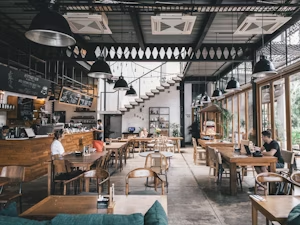
A family-run café in Brighton transformed their summer business after adding one of our commercial ice cream makers. Before, they struggled with pre-packaged ice cream taking valuable freezer space and offering limited flavours. After installing a counter-top soft serve machine alongside their espresso machine, queues started forming. 'We've increased footfall by 40% during summer months,' the owner told us. 'We're now known for our unique weekly flavours—lavender honey is causing quite a stir on Instagram!'

FAQs
- How much space do commercial ice cream machines need? Counter models need about 40-50cm width, floor-standing units around 60-80cm—measure your space first.
- How much does it cost to make homemade ice cream? Approximately £2-4 per litre for quality ingredients—sell at £15-25 per litre equivalent.
- Can one machine make both soft serve and gelato? Some premium models offer dual functionality—worth the investment for menu versatility.
- How difficult is cleaning commercial ice cream machines? Takes 15-30 minutes daily—essential for hygiene and longevity.
- What's the average lifespan of a commercial ice cream machine? 8-10 years with proper maintenance—excellent long-term investment.
- Can I use pre-made mixes or must I make from scratch? Both work brilliantly—pre-made saves time while scratch recipes offer uniqueness.
Looking for Equipment by Business Type?
Not sure where to start? Whether you're running a bustling café, opening a pizzeria, or managing a school canteen, we've made it easy to shop by business type. Explore handpicked equipment bundles and essentials tailored to your industry—saving you time and making sure you get exactly what you need.
Other Categories You Might Find Useful
We’ve selected some closely related categories that might be essential for your setup. Whether you’re expanding your kitchen or just making sure you’ve got everything covered, these links will help you explore more equipment that fits your needs.
Commercial Ice Cream Display Freezers for Gelaterias & Restaurants Commercial Ice Buckets & Ice Crushers for Bars & Restaurants Commercial Ice Crushers for Bars & Cocktail Venues Commercial Ice Cube Makers & Flakers for Bars & Restaurants Commercial Ice Moulds & Tongs for Bars & Restaurants Commercial Ice Flakers for Restaurants & Seafood Displays Commercial Ice Makers for Restaurants, Bars & Hotels Commercial Milkshake Blenders for Cafés & Ice Cream ParloursWhat our Customers Say
'The profit margins are brilliant—paid for itself in one summer season!'
J James Seaside Café, Cornwall'Our gelato machine is the best investment we've made for our dessert menu.'
L Laura Italian Restaurant, Glasgow
Why Choose EasyEquipment for Commercial Ice Cream Machines?
- Trusted Supplier 50 years helping UK businesses choose perfect frozen equipment.
- Fast Delivery Nationwide shipping with careful handling—ready for summer service.
- Best Price Promise We'll match any like-for-like quote—fair deals guaranteed.
- Expert Support Technical advice before and after purchase—no puzzling manuals alone.
Ready to Explore Commercial Ice Cream Machines?
Boost your menu and profits with a quality commercial ice cream machine. From compact counter-top models to high-output floor-standing units—we've got options to match your venue's needs with expert advice just a call away!