 Bottle Coolers & Beer Fridges
 Ice Cream Displays
 Ice Cream Machines
 Chest Freezers
 Commercial Freezers
 Commercial Fridges
 Ice Cube Makers and Flakers
 Wine Coolers
 Bain Maries
 Commercial Microwaves
 Commercial Sinks
 Commercial Ovens
 Fryers and Chip Scuttles
 Glass and Dishwashers
 Pie Warmers & Hot Food Displays
 Pizza Ovens
 Water Boilers
 Bar Supplies
 Bowls & Display Baskets
 Cash Registers
 Chafing Dish Sets & Fuel
 Menus & Boards
 Table Numbers & Stands
 Salt, Pepper & Spice Mills
 Crockery
 Cutlery
 Glassware
 Wine Glasses
 Bins
Bins Cleaning Chemicals
 GreasePak
 Janitorial Equipment
 Laundry Equipment
 Coffee Machines
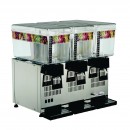 Juice Dispensers
 Juicers
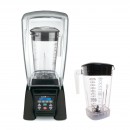 Drink Blenders
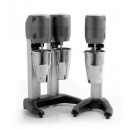 Milkshake Blenders
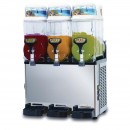 Slush Machines
 Water Boilers
 Cookware
 Gastronorm Containers
 Ingredient Bins
 Pastry & Baking
 Utensils
 Pizza Pans & Equipment
 Food Storage
 Food Transport & Delivery Bags
 Folding Furniture
 Garden and Outdoor Furniture
 High Chairs
 Chairs
 Tables
Combination Ovens
Commercial Combination Ovens are the Swiss Army knives of professional kitchens—brilliant all-rounders that transform UK restaurant and hotel operations. These versatile powerhouses combine convection, steam, and sometimes microwave functions to cook everything from roasts to patisserie with consistent results. With temperature ranges typically between 30-300°C and programmable settings, they're perfect for venues seeking menu flexibility without sacrificing precious kitchen space. After 50 years kitting out professional kitchens, we've seen how these ovens pair brilliantly with blast chillers for cook-chill systems or complement salamander grills for finishing touches. For busy kitchens demanding reliability, consistent results and menu versatility, a quality combi oven is simply transformative!
Shop By
-
 £1,292.99 £3,525.00
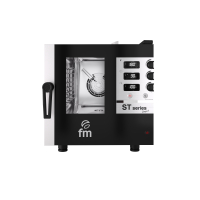
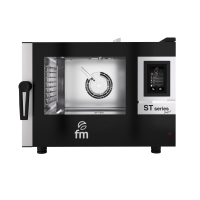
Commercial Combination Oven | Electric Combi Oven | 4 Grid GN2/3 Manual Controls | STC423E
580H x 530W x 620D mm
Single Phase
4 x GN2/3
Stainless Steel with black glass
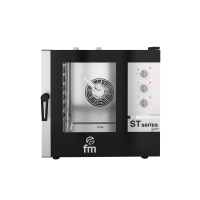
£1,443.99 £3,939.00Commercial Combination Oven | 6 Grid Electric Combi Oven | 6 x GN1/1 Manual Controls | STC611EW
665H x 720W x 620D mm
3 Phase
6 x GN1/1
Stainless Steel with black glass
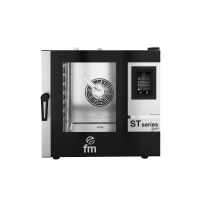
£2,137.99 £5,832.00Commercial Combination Oven | Electric Combi Oven | 6 Grid GN1/1 Touchscreen Controls | STC611-V5W
665H x 720W x 620D mm
3 Phase
6 x GN1/1
Stainless Steel with black glass
£2,309.99 £6,300.00Commercial Gas Combination Oven | 7 Grid GN1/1 | Manual Controls | Lincat STG711MGAS
825H x 790W x 900D mm
3 Phase
6 x GN1/1
Stainless Steel with black glass
£3,224.99 £8,796.00Commercial Gas Combination Oven | 7 Grid Touch Screen Combi | 7 x GN1/1 Capacity | Lainox STG71V7GAS
825H x 790W x 900D mm
3 Phase
6 x GN1/1
Stainless Steel with black glass
Commercial Combination Ovens for Restaurants & Hotels
Explore More About Combination Ovens
Get expert guidance, see real chef stories, and find answers to your most common questions.
Brands Trusted by Industry Professionals
Key Features and Benefits
- Programmable Settings Store hundreds of recipes—consistent results every service.
- Versatile Cooking Modes Switch between convection, steam, or combination—handles entire menus.
- Durable Stainless Steel Built for commercial kitchens—withstands years of intensive use.
- Fast Cooking Times Reduces cooking by up to 30%—perfect for busy service periods.
- Even Heat Distribution Eliminates hot spots—consistent cooking across all shelves.
- Self-Cleaning Function Automatic cleaning cycles—saves staff time and ensures hygiene.
- Integrated Drainage System Manages condensation and cleaning water—hassle-free maintenance.
- Multi-Level Cooking Different dishes at various temperatures simultaneously—maximises efficiency.
Too busy to read? Listen instead.
In this episode of The Deep Dive, we break down why combination ovens (combi ovens) are revolutionizing commercial kitchens. From saving space and energy to delivering consistent, high-quality results with steam, convection, or both — we cover how combi ovens boost efficiency, versatility, and profitability in foodservice operations. Perfect for chefs, caterers, and kitchen managers looking to upgrade their cooking game.
22.11min | Expert-led | Real-world advice
Read Full Podcast Transcript: "Combination Ovens" 0:00: OK, so, picture walking into a professional kitchen.
0:04: You know the scene.
0:05: Yeah, the gleaning steel, the, controlled chaos, maybe.
0:10: Exactly.
0:11: But sitting there, maybe slightly off to the side, is one piece of equipment that the source material we're looking at today describes as, well, the Swiss Army knife of that entire space.
0:23: He really is sort of the ultimate all-rounder in the catering world according to this.
0:27: We are diving deep into the commercial combination oven today.
0:31: Think of it as a single unit that brings together convection heat, steam, right, and sometimes even microwave functions, and it uses them individually or, you know, in clever combinations to tackle just a huge range of cooking tasks.
0:44: Yeah, and our insights for this, they come directly from source material provided by a supplier, someone specializing in catering equipment, which is great because it gives us a really practical industry-focused view, you know, looking at the features, the benefits, the, the brass tacks, really.
0:59: Yeah, the nitty gritty.
1:01: So our mission for this deep dive is pretty straightforward.
1:05: Based only on the source material, we want to understand what makes these ovens genuinely transformative, especially for places like UK restaurants and hotels.
1:14: Right?
1:15: We'll unpack how they actually work their magic, what crucial factors you need to weigh up if you're maybe thinking about getting one.
1:21: And reveal the surprising ways they can dramatically boost both efficiency and crucially, the quality of food coming out of the kitchen.
1:30: OK.
1:31: Let's get into it then.
1:32: Let's do it.
1:33: So starting with the basics from the source, what exactly is a commercial combination of and like at its core and why is it being called such a game changer?
1:44: Well, the material we have really emphasizes that they are brilliant all-rounders, primarily because they combine convection cooking.
1:50: OK, so that's the circulating hot air for roasting and baking.
1:53: Exactly.
1:54: Gets you great color, good texture, and they combine that with steam cooking.
1:57: They can inject precisely controlled steam into the cooking chamber, which is key for moisture, right, and speed.
2:03: Absolutely, moisture and speed.
2:06: The source does mention some models can even throw in microwave functions, you know, for extra speed, but maybe less common for the core cooking processes.
2:14: So it's not just having a separate oven and a separate steamer next to each other, it's the ability to use these cooking methods, the dry.
2:22: Heat and the moist heat in tandem, yeah, simultaneously or switching between them easily and that capability unlocks what huge menu flexibility without demanding tons of floor space.
2:33: Exactly.
2:33: You can roast, bake, steam, stew, poach, blanch.
2:37: , regenerate plated meals pretty much all in one box.
2:42: And the source consistently highlights incredibly consistent results and overall reliability, which, you know, in a demanding kitchen environment that's gold, and the temperature range mentioned in the material is huge from like a low 30 °C.
2:54: Yeah, great for holding food, poofing dough, that kind of thing all the way up to 300 degrees C, which is pretty.
3:00: for searing or roast.
3:01: A massive range coupled with the ability to store, well, hundreds of programmable settings and recipes.
3:07: Yeah, that's precisely how they guarantee the consistency the source keeps talking about.
3:12: It means you can recall the exact parameters needed for a dish, hit go, and it will come out the same way, service after service, doesn't matter who's pushing the button.
3:21: And I noticed the source points out, they don't operate in isolation.
3:25: They talk about them integrating with other kitchen systems, right, like pairing brilliantly with blast chillers, the superfast freezers, often used in cook chill systems to cool food down really fast and safe.
3:36: Yeah, yeah, chill or complementing existing kit, like, say, salamander grills, you know, for finishing or browning the top of dishes.
3:45: So they become a kind of.
3:47: hub really enabling those modern workflow techniques like cook chill or producing large batches efficiently that can be finished quickly later.
3:55: Exactly, central piece of kit.
3:57: OK, let's really get into the clever bit then.
3:59: How does this combination technology actually work, like under the hood?
4:03: Well, it's all about the ability to create and manage different atmospheres inside the oven cavity.
4:09: So you've got the conduction fans, right?
4:11: Circulating hot air for that dry heat element, essential for browning, crisping.
4:15: Got it.
4:15: Then you have a steam generation system, and that injects precise amounts of moisture.
4:20: But the genius, as the source explains it, is being able to select pure convection, pure steam, or critically.
4:28: Any mix of the two.
4:29: Precisely, any ratio of hot air and steam simultaneously.
4:33: so you're essentially controlling both the temperature and the humidity level inside the oven.
4:37: That's the key.
4:38: That is exactly it.
4:39: This allows chefs to create the absolute ideal cooking environment for whatever they're cooking.
4:44: So give me an example, like a juicy piece of fish.
4:46: OK, for fish, you don't want drying out.
4:48: You'd go high steam, maybe lower convection, need crispy chicken skin, but keep the meat moist.
4:53: Maybe start with a combi setting, then finish with dry convection, just the end, on a stew or braise, cooked faster and more evenly.
5:01: Pure steam can work wonders.
5:03: It's just about total control.
5:04: The source also mentions the evolution of the controls themselves.
5:07: It's not just on off, is it?
5:09: Oh, definitely not.
5:11: You see everything from straightforward manual dials, which some chefs still prefer for simplicity to advanced digital panels and even full touch screens like on a tablet.
5:20: And the more sophisticated systems, the source calls them things like interactive cooking systems or similar names.
5:26: They can actually guide.
5:27: Guide you through complex recipes like step by step prompts, or they might even have automatic programs that sense the food's progress, maybe through probes or sensors and adjust the settings automatically as it cooks.
5:39: And those advanced features sound pretty wild storing hundreds, or the source says even up to 1000 different programmable recipes.
5:47: Yeah, imagine having your entire menu plus specials programmed in.
5:51: Ready to go.
5:52: And moisture sensors that automatically monitor and adjust humidity levels mid-cook.
5:58: That's where the source uses that really compelling analogy.
6:01: It's like having an extra chef who never calls in sick.
6:04: Huh, OK, I can see that.
6:06: Seriously, think about it.
6:07: A highly skilled assistant who knows the precise temperature and humidity profile for every dish, executes it flawlessly every single time, adjusts automatically if needed, and is ready to go 2047.
6:20: Exactly, takes a lot of the guesswork and variability out.
6:23: OK, here's where it gets really interesting for me.
6:26: Beyond just cooking food, what kind of tangible impact does one of these ovens have on a kitchen's actual operations and, you know, the bottom line, according to the source, obviously, right, this is where the real transformation lies based on the material.
6:41: The source highlights significant gains in operational efficiency.
6:44: For one, sheer speed.
6:46: Speed, how much faster?
6:47: They claim they can reduce cooking times by up to 30% compared to traditional methods for many items.
6:52: 30% faster cooking in a busy service, that's, that's huge for turning tables or getting banquets out.
6:58: Absolutely.
6:59: And that speed translates directly to cost savings too.
7:02: The source claims up to 40% less energy used for the same volume of food cooked.
7:07: Hold on, 40% less energy?
7:08: That's the figure cited.
7:10: Up to 40%.
7:11: That's a substantial chunk of the utility bills for any business.
7:14: Wow, OK, 40% on energy is massive.
7:17: It really is.
7:18: And then.
7:18: There's just the sheer productivity boost.
7:21: The multi-level cooking capability is key here, meaning you can cook different things at once.
7:26: Exactly.
7:26: You're not just cooking one tray of something at a time.
7:30: You can cook different items on different shelves simultaneously, really maximizing the oven's capacity.
7:35: Getting more done with less equipment and less time overall.
7:39: So, you're not waiting for one batch to finish before starting the next, you're needing like 3 different ovens running for different things.
7:45: Precisely.
7:45: And crucially, this efficiency doesn't come at the expense of quality.
7:50: The source is very clear on this.
7:52: How so?
7:52: Well, that precise humidity control we talked about, it's explicitly mentioned as vital for enhancing flavor and texture.
8:00: It significantly reduces food shrinkage during cooking.
8:04: so less waste, more yield.
8:05: Exactly.
8:06: Keeps food consistently moist.
8:08: And the material also quotes an expert mentioning reduced food waste as a key benefit, likely a direct result of that consistency and minimize shrinkage.
8:18: Better results mean less gets thrown away.
8:20: OK.
8:21: And for a business owner, thinking about the investment, the source points to a pretty clear return.
8:26: Yes, the material suggests that most kitchens can actually recoup the initial investment in a quality combi oven within about 18 to 24 months.
8:34: Just through those savings, time, energy, labor, labor too, yeah.
8:39: Because they can be easier to use consistently once programmed and reduce food waste.
8:43: It all adds up, and they're not a short term purchase either, presumably.
8:46: No, the source estimates that with proper maintenance, which is key, a quality oven can last a good 7 to 10 years, sometimes longer.
8:54: So a significant piece of capital equipment, but one with a relatively quick payback period according.
9:00: To this info.
9:00: That's the picture painted, yes.
9:02: So, OK, with all these benefits, what does the source say you absolutely need to consider if you're actually looking to bring one of these into your kitchen?
9:10: What are the key buying factors?
9:12: Well, the first big one, unsurprisingly, is capacity and size.
9:16: You need to figure out how much food you need to cook at once.
9:19: The source talks about different grid types.
9:21: That's basically the size of the trays the oven takes, like GNA 11, which is that standard gastronorm size you see everywhere in pro kitchens.
9:29: OK, the rectangular metal pans, exactly, or smaller GN23 or even specific baker's trays, size 600 millimeter by 400 millimeter.
9:38: You need to match the oven's capacity, how many of these grids or trays it holds to your production volume.
9:44: Makes sense.
9:45: So grid type just means the standard professional tray size it takes precisely.
9:50: And the material gives recommendations, like 6 to 10 grid models are often suggested for smaller restaurants.
9:56: It's a balance between having enough capacity and the physical footprint in the kitchen.
10:00: Right.
10:00: Space is always tight.
10:02: Always.
10:03: For high volume places like hotels or big catering operations, 20 grid units are more common, but the source stresses you really need to check your ceiling height for those tall boys.
10:12: good point.
10:13: Don't want it hitting the ceiling.
10:14: No.
10:15: They also mentioned stackable models as a clever option.
10:18: If you have the height, but not the width, you can stack two smaller ovens, Doubs capacity vertically.
10:24: Smart.
10:24: And the source actually gives physical dimensions.
10:27: Yeah, height X width, X depth in millimeters for various models.
10:32: It really reinforces that you need to get out the tape measure and plan your space properly.
10:36: It's not just about capacity, it's about physically fitting it in.
10:39: And power source is obviously a huge one, non-negotiable, absolutely critical.
10:44: Electric models are the most common, apparently.
10:46: The source mentions power ranges from around 10 kilowatts up to maybe 40 kilowatts more for the big ones, which means you need a serious electrical supply.
10:55: Definitely.
10:56: It highlights the absolute need for a proper power supply assessment and getting a qualified electrician involved right from the planning stage.
11:04: Gas options are also available, of course, and those need proper ventilation, presumably.
11:08: Naturally, yes.
11:09: Good extraction and ventilation are key for gas appliances.
11:13: And this isn't just like plugging something into a standard wall socket, is it?
11:17: Oh, definitely not.
11:18: We're talking serious kid here.
11:19: Most commercial commi ovens require specialist installation.
11:23: That usually means hard wiring directly into the building's main power supply, and plumbing too.
11:29: You need a water inlet for the steam generation, and often for the cleaning cycles, plus drainage for the wastewater, right?
11:35: Water for steam, makes sense.
11:37: And crucially, the source repeatedly recommends installing a water filtration system on that inlet.
11:43: Why is that so important?
11:44: Lime scale.
11:46: Especially in hard water areas.
11:48: Scale buildup can seriously damage the steam generator, which is a vital and expensive component.
11:54: Good filtration extends the oven's lifespan significantly and maintains performance.
11:59: It's presented as pretty much essential, not just optional.
12:02: Got it.
12:02: Water filter is a must do.
12:04: And we mentioned controls earlier, but that's also a buying consideration, depending on how you plan to use it.
12:09: Yes, definitely.
12:10: The choice between, say, simple manual dials, digital interfaces, those fancy touchscreens, or they really advanced interactive cooking systems.
12:18: It depends, depends on what?
12:19: On the skill level of your staff, primarily, and the complexity of your menu and workflow.
12:26: Do you want something super simple, that anyone can operate for basic tasks, or do you need something that can automate entire multi-stage cooking processes?
12:33: With features like that just in time cooling mentioned to get different dishes ready simultaneously.
12:39: Exactly.
12:40: Those advanced systems offer incredible control and automation, but they might require more initial setup and training.
12:46: So it's about matching the tech level to your kitchen's needs and capabilities.
12:50: OK.
12:51: So let's say you've chosen your oven, it's installed, putting this knowledge into practice.
12:57: What are some essential tips and practicalities the source offers for actually using these ovens effectively day to day?
13:03: Yeah, the source provides some clear top tips for usage.
13:06: Number one, always preheat the oven properly.
13:09: How long usually?
13:10: Typically 1015 minutes is recommended.
13:12: Just ensures consistent results from the moment the food goes in.
13:15: You don't want it slowly coming up to temp with the food already inside, right, and use the right containers.
13:20: Yes.
13:21: Back to those gasconorm trays or appropriate baking sheets.
13:25: Using the correct trays is key to maximizing the oven's capacity efficiently and ensuring even heat transfer all around the food.
13:32: So don't just shove any old tray from the back of the cupboard in there.
13:35: Exactly.
13:36: They're designed to fit perfectly and allow the air and steam to circulate properly.
13:40: A detailed cleaning routine is also vital.
13:42: Following the manufacturer's specific guidelines is crucial for hygiene and keeping the oven running well.
13:48: And again, that water filtration system.
13:51: Mentioned it again in the usage tips, yes.
13:53: Keeping it maintained is key.
13:55: But perhaps the most sort of striking insight from the tips section is the emphasis on staff training.
14:01: , yes, you mentioned this potential issue earlier.
14:04: Right.
14:05: The source notes it's surprisingly common for venues to only use about 20%, just 1/5 of their expensive Cobi Evans capabilities.
14:12: Why?
14:13: Just because staff aren't fully trained on all the functions?
14:16: Apparently so.
14:18: They stick to the basic convection or steam modes they know, and all those advanced combi modes, programming features, maybe even the cleaning cycles, just don't get used.
14:26: Wow.
14:27: So you invest potentially tens of thousands of pounds in this powerful piece of technology.
14:32: And you could be leaving 80% of its potential, its value, just sitting there unused.
14:38: That training piece seems absolutely critical to actually realizing that ROI we talked about earlier.
14:42: It really does.
14:43: Seems like the biggest potential pitfall after the initial cost.
14:46: It it truly is presented as the key to unlocking all those benefits, the speed, the consistency, the advanced cooking techniques.
14:54: The source also includes essential safety guidelines, which are obviously important.
14:58: Like what?
14:59: Things like regularly inspecting door seals to make sure they're unattached, keeps the heat and steam in.
15:04: Loading trays properly, not overloading, to ensure good airflow.
15:08: Always standing back when opening a hot or steaming oven door, that blast of steam can be dangerous.
15:13: Yeah, definitely felt that opening a domestic oven sometimes.
15:16: Exactly, but amplified, using proper heat resistant oven gloves, obviously, turning off the unit completely at the mains before any servicing or deep cleaning, and ensuring that initial installation was done professionally and correctly.
15:28: Basic safety, but crucial in a pro-environment.
15:31: And looking at the FAQ section in the material, it clarifies a few common questions people might have.
15:38: For instance, the main difference between a combi oven and just a standard convection oven.
15:43: Yeah, boils down to that crucial added scheme capability.
15:46: A standard convection oven just circulates dry hot air.
15:50: The combi adds the ability to introduce and precisely control moisture alongside that dry heat, that's the defining feature.
15:57: OK.
15:58: And does the source say a combi oven can actually replace other equipment?
16:02: Yes, absolutely.
16:03: It confirms that a kambi can replace multiple separate pieces of equipment.
16:07: It specifically lists convection ovens, stand-alone steamers, and even things like slow cookers as examples, which brings us right back to those space saving and operational efficiency benefits we discussed.
16:18: Fewer machines needed overall.
16:20: Exactly, one machine doing the work of 3 or 4 potentially and addressing cleaning because these are complex machines.
16:26: The source highlights that most modern models feature quite sophisticated, often fully automatic cleaning cycles.
16:33: So it's not necessarily hours of scrubbing by hand.
16:35: Hopefully not.
16:36: These cycles use detergents and water jets to clean the interior, making a potentially daunting task much more manageable.
16:43: And for smaller restaurants worried about size, the material just reinforces that those 6 to 10 grid models are designed specifically to balance good capacity with a more modest kitchen footprint.
16:54: They haven't forgotten the smaller operator.
16:56: OK, so connecting all these dots, who does the source material say really benefits the most from this kind of technology?
17:02: Which types of businesses?
17:04: Well, they list several key types.
17:06: Restaurants, obviously helps them handle varied menus with consistency.
17:10: Even complex dishes.
17:11: Hotels are a big one, leveraging them for scale, providing consistent quality for banqueting, room service, multiple dining outlets.
17:18: Right, the volume in hotels is huge, huge.
17:21: Catering companies too.
17:22: They rely on them for high volume production, cooking large batches, and also for regenerating food safely and quickly on site.
17:28: And interestingly, gastropubs are mentioned.
17:31: Why gastropubs specifically?
17:32: The implication is that combi ovens can help them elevate the quality and consistency of classic pub fare, maybe introduce more sophisticated dishes while still maintaining the speed and efficiency needed in a busy pub environment.
17:44: In the Birmingham restaurant case study that's mentioned in the material, that really brings the potential impact to life, doesn't it?
17:50: It's a really compelling little example, yeah.
17:52: This restaurant was reportedly struggling.
17:54: Issues with inconsistency in their food, slow table turnover time, problems, very common.
18:00: So, they installed a 10 grid combi oven alongside their existing kit, and the reported results were pretty dramatic, a 35% increase in the number of covers they could serve.
18:11: 35% more customers served.
18:13: Yeah.
18:14: Significantly improved food quality and consistency reported by customers.
18:18: They gained the ability to take on special events and functions they previously couldn't handle because of kitchen limitations, and Maybe counterintuitively.
18:27: What?
18:28: Their energy bills actually went down despite serving significantly more people, likely due to that energy efficiency we talked about.
18:36: Wow, that's a pretty concrete example of the kind of transformation the source is talking about.
18:41: It really paints a picture, doesn't it?
18:43: And the experts quoted in the source material seemed to back all this up strongly, like Oliver Bennett calling it the Swiss Army knife.
18:51: Exactly, saying it genuinely saves time, energy, and precious floor space.
18:56: And the other expert quoted, Mark.
18:58: What does he add?
18:59: He reinforces that they are becoming the backbone of modern kitchens.
19:03: Emphasizes that they typically pay for themselves relatively quickly through those tangible benefits, reduce food waste, faster cooking times, and enabling more flexible and complex menus without needing an army of specialist chefs.
19:16: OK.
19:17: So what's fascinating here is, it sounds almost universally positive from the source's perspective.
19:23: Does the material mention any significant downsides or challenges with these ovens at all?
19:27: Yes, to be fair, it does list what they frame as the primary cons.
19:31: The most significant one is definitely the higher initial investment.
19:34: Compared to standard ovens or steamers bought separately.
19:37: Exactly.
19:38: These are pieces of professional capital equipment, often highly engineered, and that comes with a significant price tag upfront.
19:45: It's a major purchase decision for any business.
19:48: Makes sense.
19:49: What else?
19:50: And the other key challenge, which we've touched on a couple of times now, is the essential need for proper staff training, right, the 20% usage issue.
19:58: Precisely, ensuring the kitchen team is actually utilizing the oven to its full potential, understanding all the modes and features.
20:07: That requires an investment in time and training for people, not just buying the equipment itself.
20:12: If you don't do that, you won't get the full benefit.
20:15: So, cost and training, the two main hurdles identified.
20:18: Those are the main ones highlighted in the source material.
20:21: OK, so.
20:22: To sort of wrap up this deep dive them based purely on the source material we've explored today, commercial combination ovens are clearly presented as, well, transformative pieces of equipment for professional kitchens.
20:33: Absolutely.
20:34: They consolidate multiple cooking functions into one unit, offer incredible versatility, deliver really remarkable efficiency gains in terms of time, energy, maybe even labor, and ensure consistent high food quality.
20:47: By masterfully combining those different cooking methods, the heat and the steam.
20:52: They're presented not just as an oven, really, but as a central piece of kitchen technology that impacts the whole workflow, the costs, and the overall capability of what a kitchen can produce.
21:03: That sums it up well based on the source.
21:06: So maybe the next time you're enjoying a meal out, perhaps in a restaurant or a hotel, just take a moment to appreciate the the operational complex.
21:15: humming away behind the scenes.
21:17: Maybe you'll look differently at how quickly high quality consistent dishes can arrive at your table, understanding some of the clever technology like the combi oven that might be making that magic happen back there.
21:29: It certainly gives you a new appreciation for it.
21:31: And thinking about the future.
21:33: Given the source material highlighting features like increasingly interactive cooking systems, you know, with automatic programs and advanced timing functions like that, just in time cooling, designed to synchronize different dishes for service.
21:47: Where the tech is heading.
21:48: Yeah, consider this.
21:50: As these ovens become potentially even more intelligent, more capable of automating and coordinating complex cooking processes, How might that fundamentally change the role, maybe even the skills required of a chef, particularly in high volume commercial kitchens, in the future?
22:07: That's a really interesting thought to leave things on.
22:09: What does the chef become when the oven gets that smart?
Essential Buying Considerations
Capacity and Size
- Consider 6-10 grid models for smaller restaurants—fits tight kitchen spaces.
- Larger 20-grid units suit hotels and high-volume venues—check ceiling height.
- Stackable models double capacity—ideal for growing businesses.
Power Source and Usage
- Electric models (10-40kW) require proper power supply—consult your electrician.
- Gas options available—pair with ventilation systems.
- Water filtration systems extend oven life—consider as companion purchase.
How Commercial Combination Ovens Work
Combination ovens perform their culinary magic by harnessing three cooking methods in one clever unit. At their core, they use convection fans to circulate hot air evenly around food—perfect for roasting and baking. Flip a setting, and they'll inject precisely controlled steam to preserve moisture and nutrients while speeding up cooking times by up to 30%. The clever bit? You can use these functions individually or simultaneously, creating the ideal environment for any dish. Most professional models feature touchscreen controls that store hundreds of recipes, while moisture sensors continuously monitor and adjust humidity levels automatically. It's like having an extra chef who never calls in sick!

Trusted Insights from Oliver Bennett

Commercial Catering Equipment Specialist
12+ years experience
"Combination ovens are the Swiss Army knife of commercial kitchens—steam, bake, roast, all in one unit! Invest in a quality combi oven and you’ll save time, energy, and floor space without compromising on performance."Safety Guidelines
- Regular Inspection Check door seals weekly—prevents steam burns.
- Proper Loading Secure trays correctly—avoids accidents during use.
- Beware Steam Stand back when opening—steam can cause serious burns.
- Use Oven Gloves Heat-resistant gloves essential—protects staff.
- Turn Off When Servicing Disconnect power before maintenance—prevents shocks.
- Proper Installation Professional setup ensures safety—don't DIY electrical work.
Top Tips for Using Commercial Combination Ovens
To get the most from your combination oven, always preheat properly—usually 10-15 minutes for optimal performance. Use the right containers; gastronorm trays maximise capacity and heat transfer. Implement a detailed cleaning routine following manufacturer guidelines, and install a water filtration system to prevent limescale build-up in steam generators. Finally, invest time training all kitchen staff on programming features—it's amazing how many venues only use 20% of their oven's capabilities!
Benefits of Using Commercial Combination Ovens
- Superior Food Quality Precise humidity control—enhances flavour and texture.
- Operational Efficiency Cook multiple dishes simultaneously—transforms busy services.
- Reduced Running Costs Up to 40% less energy use—significant annual savings.
Did You Know?
- Time Savings Combination ovens reduce cooking times by up to 30%—UK kitchen tested.
- Longevity Quality combi ovens last 7-10 years with proper maintenance.
- Versatility Top models store up to 1,000 programmable recipes—menu expansion made easy.
- ROI Most kitchens recoup investment within 18-24 months through efficiency gains.

Expert Insights on Commercial Combination Ovens
After fitting thousands of commercial kitchens over five decades, we've seen combination ovens revolutionise operations. 'They're the backbone of modern kitchens,' explains Mark, our equipment specialist. 'A good combi oven basically pays for itself through reduced food waste, faster cooking times, and menu flexibility.'
- Pros: Versatile, space-saving, consistent results, reduced energy and food costs.
- Cons: Initial investment higher than standard ovens—training staff essential.
Who Needs Commercial Combination Ovens?
- Restaurants Perfect for varied menus—handles everything from roasts to delicate desserts.
- Hotels Ideal for banqueting and room service—consistent quality at scale.
- Catering Companies Streamlines high-volume production—feeds crowds efficiently.
- Gastro Pubs Elevates traditional pub fare—balances quality with speed.

Real-World Success with Commercial Combination Ovens
A bustling Birmingham restaurant provides the perfect case study. Their kitchen was struggling with inconsistent cooking and slow table turnover during peak times. After installing one of our 10-grid combination ovens alongside their existing salamander grill, everything changed. 'We've increased covers by 35% while improving food quality,' the head chef told us. 'We're now running special events we couldn't have managed before, and our energy bills are down despite serving more customers—it's been game-changing for us.'
FAQs
- What's the difference between combination and convection ovens? Combi ovens add steam capability—essential for moisture retention and faster cooking times.
- How much space do commercial combination ovens require? Compact models start at 800mm width—check specs for extraction clearance requirements.
- Do combination ovens need special water connections? Yes, they require both water inlet and drain connections—filtered water highly recommended.
- Can combination ovens really replace multiple pieces of equipment? Absolutely—they can perform functions of convection ovens, steamers, and even slow-cookers.
- How difficult is cleaning commercial combi ovens? Most modern models feature automatic cleaning—simply add detergent and press start.
- What's the best combination oven for a small restaurant kitchen? 6-10 grid models balance capacity with footprint—ideal for space-conscious operations.
Looking for Equipment by Business Type?
Not sure where to start? Whether you're running a bustling café, opening a pizzeria, or managing a school canteen, we've made it easy to shop by business type. Explore handpicked equipment bundles and essentials tailored to your industry—saving you time and making sure you get exactly what you need.
Other Categories You Might Find Useful
We’ve selected some closely related categories that might be essential for your setup. Whether you’re expanding your kitchen or just making sure you’ve got everything covered, these links will help you explore more equipment that fits your needs.
What our Customers Say
'Our combination oven has transformed our kitchen efficiency—brilliant bit of kit!'
J James Head Chef, The Copper Kettle, Leeds'Worth every penny—consistent results and our energy bills have dropped notably.'
C Charlotte Hotel Operations Manager, The Harbourside, Bristol
Why Choose EasyEquipment for Commercial Combination Ovens?
- Trusted Supplier 50 years helping UK kitchens thrive—genuine expertise.
- Comprehensive Delivery Full installation service available—worry-free setup.
- Best Price Promise Value without compromising quality—competitive market rates.
- Technical Support Expert advice before and after purchase—we're here to help.
Ready to Explore Commercial Combination Ovens?
Transform your kitchen's capability with our range of professional combination ovens. From compact units for cafés to high-capacity models for hotels, we'll help you find the perfect match for your culinary ambitions and operational needs!