 Bottle Coolers & Beer Fridges
 Ice Cream Displays
 Ice Cream Machines
 Chest Freezers
 Commercial Freezers
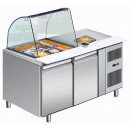 Commercial Fridges
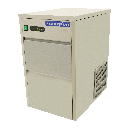 Ice Cube Makers and Flakers
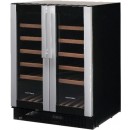 Wine Coolers
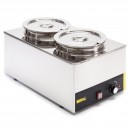 Bain Maries
 Commercial Microwaves
 Commercial Sinks
 Commercial Ovens
 Fryers and Chip Scuttles
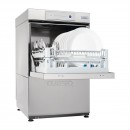 Glass and Dishwashers
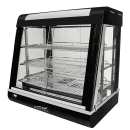 Pie Warmers & Hot Food Displays
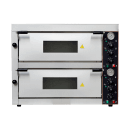 Pizza Ovens
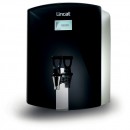 Water Boilers
 Bar Supplies
 Bowls & Display Baskets
 Cash Registers
 Chafing Dish Sets & Fuel
 Menus & Boards
 Table Numbers & Stands
 Salt, Pepper & Spice Mills
 Crockery
 Cutlery
 Glassware
 Wine Glasses
 Bins
Bins Cleaning Chemicals
 GreasePak
 Janitorial Equipment
 Laundry Equipment
 Coffee Machines
 Juice Dispensers
 Juicers
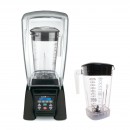 Drink Blenders
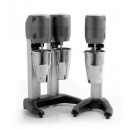 Milkshake Blenders
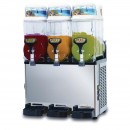 Slush Machines
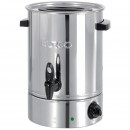 Water Boilers
 Cookware
 Gastronorm Containers
 Ingredient Bins
 Pastry & Baking
 Utensils
 Pizza Pans & Equipment
 Food Storage
 Food Transport & Delivery Bags
 Folding Furniture
 Garden and Outdoor Furniture
 High Chairs
 Chairs
 Tables
Commercial Microwaves
Commercial microwaves are the unsung heroes of professional kitchens across the UK, delivering lightning-fast heating and cooking when you're in the thick of service. Unlike domestic models, these robust workhorses pack serious punch with power ratings from 1000W to a whopping 3000W, making light work of defrosting, reheating, and even cooking. After 50 years kitting out kitchens, we've seen how these machines transform workflow in everything from bustling restaurants to cosy cafés. They pair brilliantly with combi ovens for a complete cooking setup, slashing wait times and keeping your kitchen running like clockwork even during the busiest rushes!
Shop By
-
 £222.99 £332.00
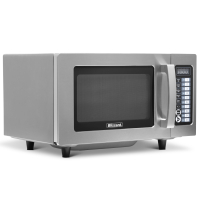
Commercial Microwave | Light Duty Microwave | 1000W Output | Blizzard BCM1000
16.5311H x 511W x 398D mm
Blizzard
25 ltr
Stainless Steel
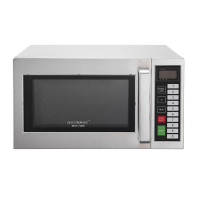
£262.99 £657.00Commercial Microwave Oven | 1000W Professional Microwave | Medium Duty Kitchen Equipment | Maestrowave MW10T
312H x 520W x 456D mm
13 amp plug fitted
Touch controls with 10 presets
Stainless Steel
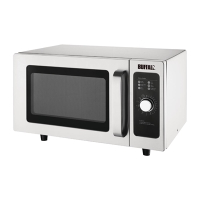
£316.35 £474.53Commercial Microwave | Manual Microwave | 25L 1000W | Buffalo FB861
16.516.5
Buffalo
25Ltr
Stainless Steel
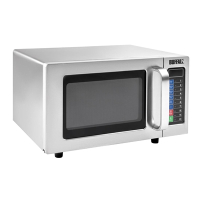
£340.69 £511.03Commercial Microwave | Programmable Microwave | 25L 1000W Capacity | Buffalo FB862
16.516.5
Buffalo
25Ltr
Stainless Steel
£369.99 £972.00Commercial Microwave | 1000W Catering Microwave Oven | Touch Control | Panasonic NE-1027
18 KG360H x 510W x 306D mm
13 amp plug fitted
22 Litre
Stainless Steel
£379.99 £972.00Commercial Microwave | 1000W Microwave Oven | Stainless Steel | Panasonic NE-1037
17kg306H x 510W x 406D mm
13 amp plug fitted
22Ltr
Stainless Steel
£394.99 £987.00Commercial Microwave Oven | 1200W Professional Microwave | Programmable Controls | Maestrowave MW1200
20 Kg420H x 585W x 600D mm
13 amp plug fitted
11 power levels
Stainless Steel
£420.75 £631.13Light Duty Programmable Microwave | Commercial Microwave Oven | 23L 1000W | Menumaster RMS510TS2UA DY418
13.6kg13.6kg
Menumaster
23Ltr
🎯 Need Help Choosing the Right Commercial Microwaves?
Discover how to choose the right model with expert advice on buying considerations, kitchen-tested usage tips, frequently asked questions and real-world chef insights below.
🎧 On the go? Listen to our expert podcast instead
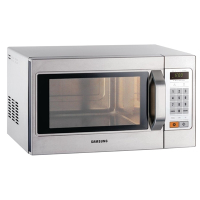
£450.67 £676.01Commercial Microwave Oven | Light Duty 1100W | Programmable | Samsung CM1099
18.65297H x 517W x 412D mm
13 amp plug fitted
26Ltr
Stainless Steel
£475.71 £713.57Commercial Microwave Oven | Samsung Microwave | 1100W | Samsung CM1089 CB937
18.5297H x 517W x 412D mm
13 amp plug fitted
26Ltr
Stainless Steel
£626.99 £933.00Commercial Microwave | Heavy Duty 1800W | Professional Kitchen Appliance | Blizzard BCM1800
34.5368H x 575W x 527D mm
Blizzard
34 ltr
Stainless Steel
£646.99 £1,078.00Commercial Microwave Oven | Heavy Duty Catering Microwave | 1900W Power | Sharp R24AT
35.5 KG4200H x 5750W x 5850D mm
13 amp plug fitted
20 Litre
Stainless Steel
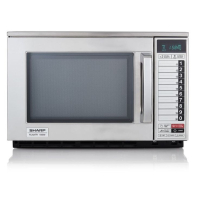
£682.99 £1,707.00Commercial Microwave Oven | 1500W Professional Microwave | Heavy Duty Catering Microwave | Sharp R22AT
33 KG335H x 510W x 470D mm
13 amp plug fitted
20 Litre
Stainless Steel
£689.99 £1,725.00Commercial Microwave Oven | 1900W Professional Microwave | Heavy Duty | Sharp R23AM
33 KG335H x 510W x 470D mm
13 amp plug fitted
20 Litre
Stainless Steel
£691.47 £1,037.21Commercial Manual Microwave | 22L 1000W Microwave Oven | Professional Kitchen Appliance | Panasonic NE1027BTQ
17kg306H x 510W x 360D mm
Panasonic
22Ltr
Stainless Steel
£736.99 £1,228.00Commercial Microwave Oven | 1900W Sharp Microwave | Cavity Protection System | Sharp R24ATCPS1A
35.5 KG4200H x 5750W x 5850D mm
13 amp plug fitted
1900W output
Stainless Steel
£758.91 £1,138.37Light Duty Manual Microwave | Commercial Microwave Oven | 23ltr 1000W | Menumaster RMS510DS2UA DY419
13.6kg13.6kg
Menumaster
23Ltr
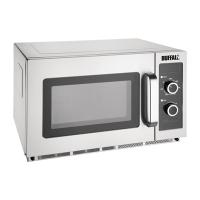 £766.58 £1,149.86
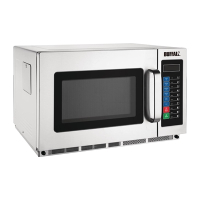
Commercial Microwave Oven | Manual Microwave | 34L 1800W | Buffalo FB863
36.5368H x 528W mm
Buffalo
34Ltr
Stainless Steel
£772.99 £1,932.00Commercial Microwave Oven | 1500W Heavy Duty | Professional Kitchen Microwave | Sharp R22ATCPS1A
335H x 510W x 470D mm
13 amp plug fitted
Double quantity
Stainless Steel
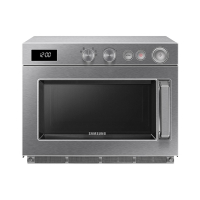
£776.19 £1,164.29Commercial Microwave | Manual Microwave | 26L Capacity 1500W | Samsung FS317
36.5368H x 464W x 557D mm
13 amp plug fitted
26 Litre
Stainless Steel
£779.99 £1,950.00Commercial Microwave Oven | 1900W Professional Microwave | Cavity Protection System | Sharp R23AMCPS1A
335H x 510W x 470D mm
13 amp plug fitted
Manual controls with digital timer
Stainless Steel
£790.91 £1,186.37Commercial Microwave Oven | Programmable 34L Microwave | 1800W Heavy Duty | Buffalo FB864
36.5368H x 528W mm
Buffalo
34Ltr
Stainless Steel
£803.07 £1,204.61Commercial Compact Microwave Oven | Programmable Microwave | 17L Capacity | Buffalo FB865
35.5340H x 420W x 563D mm
Buffalo
17Ltr
Channels energy from the top and base for consistent cooking throughout the cavity
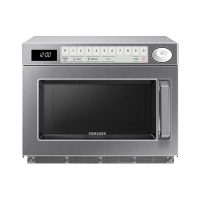
£901.38 £1,352.06Commercial Microwave | Samsung Professional Microwave | 26L Capacity 1850W | Samsung CM1919
34.5368H x 464W mm
Samsung
Stackable - double capacity using no extra worktop space
Stainless Steel
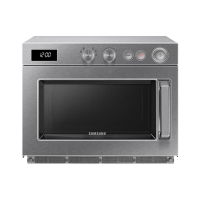
£926.42 £1,389.62Commercial Microwave | Digital Microwave | 26L Capacity 1850W | Samsung FS316
34.5368H x 464W x 557D mm
13 amp plug fitted
26 litre
Stainless Steel
£1,699.99 £4,293.00Commercial Microwave | 1800W Heavy Duty | Programmable Catering | Panasonic NE-1880
54kg472H x 650W x 526D mm
Single Phase
44.14Ltr
Stainless Steel
£2,249.99 £4,947.00Commercial Microwave | High Power 3200W Microwave Oven | Heavy Duty Catering Appliance | Panasonic NE-3280
65kg471H x 650W x 526D mm
Single Phase
44Ltr
Stainless Steel
Commercial Microwaves for Restaurants & Professional Kitchens
Explore More About Commercial Microwaves
Get expert guidance, see real chef stories, and find answers to your most common questions.
Brands Trusted by Industry Professionals
Key Features and Benefits
- High Wattage Power From 1000-3000W—heats up to 5x faster than domestic units.
- Programmable Presets Store up to 100 menu items—perfect consistency every time.
- Durable Construction Built for 200+ uses daily—lasts for years in professional settings.
- Stainless Steel Cavity Stands up to spills and splatters—easy cleaning between uses.
- Power Level Options Fine-tune output for perfect results—from gentle warming to rapid cooking.
- Advanced Cooling Systems Prevents overheating during non-stop service periods.
- Stackable Design Maximize counter space—double your output in the same footprint.
- Heavy-Duty Door Construction Withstands thousands of daily openings—built for intense use.
Too busy to read? Listen instead.
In this episode of The Deep Dive, we explore commercial microwaves—from duty levels and wattage to intuitive controls, programmable presets, and stackable designs. Learn how to select the right model for throughput, workplace safety, and energy efficiency.
19.50min | Expert-led | Real-world advice
Read Full Podcast Transcript: "Commercial Microwaves" 0:00: Ever wondered why the food you get at your favorite lunch spot zaps so quickly in the microwave?
0:05: yeah.
0:06: Here's a clue, commercial microwaves can heat things up to 5 times faster than the one.
0:12: , humming away in your kitchen 5 times.
0:15: That's pretty significant.
0:17: It really is.
0:17: It's kind of the unsung hero of keeping busy kitchens, well, busy and moving definitely.
0:23: Today on the deep dive, we're pulling back the curtain on these powerful pieces of kit.
0:28: Exactly.
0:29: And we're tapping into, some great insights here specifically from easy equipment.
0:34: They're a UK based supplier with like 50 years of experience in this field.
0:39: Yeah, so they know their stuff.
0:41: We're using their expertise to really get to grips with what makes these commercial microwaves tick, right?
0:47: So whether you're running a restaurant, managing a cafe, maybe you're just fascinated by the engine room of professional kitchens, we're gonna give you the inside track today, and we should be clear, this isn't just about reheating last night's dinner.
0:58: Commercial microwaves are Well, a different beast altogether.
1:02: Totally different league.
1:03: Our goal today is really to explore what sets them apart, what they're truly capable of, and maybe understand why they're such a critical factor in keeping the food service industry running smoothly.
1:15: OK, so, maybe the best place to start is.
1:18: What is a commercial microwave?
1:20: How is it actually different from the one I might have at home?
1:23: Well, right off the bat, think about durability.
1:26: I mean, these things are built tough.
1:27: They aren't designed for just warming up leftovers now and then.
1:30: They're constructed to withstand the, you know, the.
1:33: Daily grind of a professional kitchen.
1:36: Constant use, right, the wear and tear must be immense.
1:39: Exactly.
1:40: And the power, it's just on a whole different level.
1:42: We're talking power ratings from say 1000 watts all the way up to a hefty 3000 watts.
1:47: Whoa, compared to what, like 600, 700 for a typical home one?
1:52: Yeah, maybe 800 if you're lucky.
1:54: It's like comparing a standard family car engine to something you'd find under the hood of a race car.
1:58: Seriously different performance.
2:00: And I guess that sheer power is the key to their main job, right?
2:03: Incredibly fast heating, cooking, even defrosting.
2:06: They have to handle the constant demands of a busy place where, you know, every single second counts.
2:12: Think about reheating multiple portions in the time it takes a domestic model to maybe do just one.
2:18: That's game-changing during a rush.
2:20: Oh yeah.
2:21: They really are the workhorses and restaurants, cafes, hotels, you name it.
2:26: They fundamentally change how kitchens operate, really allowing teams to keep pace when those orders are just flying in.
2:32: And something else Easy Equipment points out, which is interesting, is how well they integrate with other kit, like what, like call me up.
2:40: You know those ones that use both convection heat and steam.
2:43: right.
2:44: Think about the speed you get combining those two.
2:46: You could zap something quickly in the microwave, get it hot, then maybe crisp it up or finish it perfectly in the combi.
2:52: That combination could slash customer wait times.
2:55: Exactly.
2:56: It's about that efficient workflow.
2:59: OK, so let's dive into some of the the specific features that make these microwaves such champions of speed and efficiency.
3:06: Right, let's do it.
3:07: Let's circle back to that high wattage first.
3:10: Because jumping from, say, 600 or 700 watts in a domestic unit to, well, 1000 watts minimum, often up to 3000, that's not just a little faster.
3:21: No, it's that 5 times faster figure we mentioned, right?
3:24: Imagine the bottleneck that removes during a busy service.
3:27: It's huge.
3:29: Allows for more, maybe just in time cooking too, possibly cutting down on food waste.
3:34: Good point.
3:35: And it's not just about brute force heating, is it?
3:37: They've got brains too.
3:38: How so?
3:39: Well, many commercial models have programmable presets.
3:42: You can store settings for like up to 100 different menu items.
3:45: 100.
3:46: Wow.
3:46: Yeah, think about the consistency that brings.
3:48: Every single time a customer orders, say, that popular soup or a specific dish component, it's heated.
3:54: Exactly the same way, perfect result every time, no matter who's working.
3:58: Exactly.
3:58: Consistency is key in food service.
3:59: Absolutely.
4:00: And then there's just the sheer build quality.
4:02: These aren't flimsy things.
4:04: Easy equipment highlights that they're designed to handle over 200 uses every single day.
4:09: Yeah, and they can have an average lifespan of 5 to 8 years in that kind of heavy use environment.
4:15: That tells you a lot about the components compared to a home microwave.
4:19: Absolutely, and that.
4:20: Shiny stainless steel interior that's not just for looks, right?
4:23: Oh, not at all.
4:23: It's incredibly practical.
4:25: Stainless steel is tough.
4:27: It resists spills and splatters, and crucially, it's much easier and faster to wipe clean between uses, which is vital in a busy kitchen, hygiene and speed.
4:37: Paramount, yeah.
4:38: Another key thing is the range of power level options.
4:41: It's not just high or off, right?
4:43: You can actually control it.
4:44: You can fine tune the output.
4:46: Gentle warming for a delicate sauce maybe or full power for rapid cooking of something more substantial gives you versatility.
4:53: Makes sense.
4:54: And dealing with all that power, it must get hot.
4:57: They do, which is why advanced cooling systems are essential.
4:59: You can't have your microwave overheating and shutting down mid-service.
5:02: Nightmare scenario.
5:04: Totally.
5:04: These systems keep them reliable during the.
5:07: Relentless periods.
5:08: And what about space?
5:09: Kitchens are often tight on space.
5:11: Good point.
5:12: That's where stackable models come in.
5:14: A really smart design feature.
5:16: So you can put one on top of another.
5:18: Exactly.
5:18: Double your microwave capacity without using any more precious counter space.
5:22: Yeah, especially useful if you're also trying to fit in those combi ovens or other gear.
5:27: Smart.
5:28: And one more thing, the doors.
5:30: yes, the heavy duty door construction.
5:33: Think about how many times that door gets opened and let's be honest, probably slammed shut in a hectic kitchen hundreds of times a day, easily.
5:40: So they're built with really robust hinges and lack.
5:44: designed specifically to withstand that constant wear and tear.
5:48: OK, so a lot of features there.
5:50: If someone listening runs a food business and is thinking, right, I need one of these, what are the absolute non-negotiables they need to consider before buying?
5:58: OK, first things first.
6:00: Power and capacity.
6:02: You absolutely have to match the wattage to your business volume and what you're cooking.
6:07: So not just getting the most powerful one available.
6:09: Not necessarily.
6:10: Easy equipment suggests, you know, maybe 1000 watts could be OK for lighter use, like a small cafe, just warming pastries.
6:17: But if you're a really busy venue, constantly slammed, you should probably be looking at that 1800 to 3000 watt range to keep up.
6:25: OK, and capacity, that's just the size inside.
6:28: Well, yes, the overall internal volume matters.
6:31: They range from, say, compact 20 L models up to more spacious 34 L ones, but maybe even more critical sometimes is the internal height, the plate clearance.
6:43: so can you actually fit your stuff in?
6:45: Precisely.
6:46: You need to make sure your tallest common items like a deep soup bowl.
6:49: or a tall latte mug will fit comfortably without hitting the roof of the microwave.
6:54: Otherwise you're constantly decanting, reheating, wasting time.
6:57: Good tip.
6:58: What about the level of daily use?
7:00: How does that factor in?
7:01: Yeah, that's really important.
7:02: Easy equipment actually breaks it down.
7:04: Light use is maybe up to 50 times a day, medium around 100 times, and heavy is 200+ times.
7:10: OK.
7:10: Knowing where you fall helps you gauge the robustness and power you really need.
7:14: A place mainly warming croissants doesn't need the same beast as a restaurant reheating complex meal components constantly.
7:21: Makes sense.
7:21: Also, think realistically about those programmable settings.
7:25: Do you need 10 or 100?
7:27: Right?
7:28: Don't pay for features you won't use.
7:30: Exactly.
7:31: And again, if space is tight, seriously consider those stackable designs.
7:36: They can be lifesavers.
7:37: OK, let's peek under the hood a bit.
7:39: How did these things actually like work?
7:42: What's the science?
7:43: Well, at the heart of it is a device called a magnetron.net.
7:47: It basically takes electrical energy and converts it into microwave energy, these specific electromagnetic waves.
7:55: When these microwaves hit the food.
7:57: They make the water molecules inside vibrate incredibly fast, like millions of times per second, and that vibration creates heat.
8:05: Exactly.
8:06: It's intense friction at a molecular level, and that's what generates the heat, cooking or reheating the food pretty much from the inside out.
8:13: So the big difference in commercial models is just a more powerful magnetron, more intense vibration, faster heating.
8:19: That's the core of it, yes.
8:20: Higher wattage equals faster cooking.
8:22: Simple as that.
8:23: Gotcha.
8:23: Plus, as we mentioned, those programmable memory settings help ensure it happens the same way every time.
8:28: And of course, the whole unit is built with tougher components, better insulation to keep the energy in, and those crucial cooling systems to handle running hard for long periods.
8:37: OK, super important topic, kitchen safety.
8:41: What are the key safety rules for using these powerful machines?
8:45: Right.
8:46: Top priority.
8:47: First, check those door seals regularly, like really regularly.
8:51: Why is that so critical?
8:52: Any damage, even small tears or gaps, could potentially lead to microwave energy leakage, so they need to be intact and clean.
8:59: OK, what else?
9:00: Always place the microwave on a stable level surface, obvious maybe.
9:04: These can be heavy.
9:05: You don't want them tipping over.
9:07: And a really crucial one.
9:09: Never ever operate the microwave when it's empty.
9:11: Why not?
9:12: The microwaves need something to be absorbed by usually the water and food.
9:15: If there's nothing inside, the energy bounces around, can seriously damage the magnetron itself.
9:20: Expensive mistake.
9:21: Ouch.
9:22: OK, and containers.
9:25: yes.
9:25: I only ever use microwave safe containers.
9:28: No metal, absolutely no metal foil, no metal trim on plates, no metal utensils, sparks, fire, damage to the microwave, just don't do it.
9:38: Stick to glass, ceramic, and plastics that are specifically labeled as microwave safe.
9:43: Got it.
9:44: What about tips for just Making them last longer and work better day to day.
9:49: OK, practical stuff.
9:50: Easy equipment suggests that during really heavy continuous use, it's actually a good idea to give the microwave a short break, maybe 5 minutes here and there, just to cool down a bit.
9:59: Yeah, let's the components cool off can definitely help prolong its life.
10:03: Also electricity, these things draw a lot of power, right, those high wattages.
10:07: So you absolutely need to ensure you have the correct electrical setup for the higher powered models, that often means needing a dedicated electrical circuit, so you don't blow a fuse or overload thing.
10:16: Exactly, get it checked by an electrician if you're unsure.
10:19: , cleaning is key too.
10:21: daily wipe down of the inside cavity with a non-abbrasive cleaner.
10:25: Keep it hygienic and wipe those door seals daily too, keeps them effective.
10:29: Covering food loosely while heating helps prevent messy splatters inside, saves cleaning time.
10:34: Good tip.
10:35: And think about efficiency.
10:37: Reprogramming common items is great.
10:39: Train your staff properly on using the different power levels, maybe even have a simple reference chart nearby, and just to hammer it home, no metal crays, and be careful when opening containers after heating lets steam escape away from you, burns happen easily.
10:55: Excellent advice.
10:56: OK, so speed is the big obvious benefit, but are there other advantages these commercial units bring to a food business?
11:03: Oh, definitely.
11:04: Speed translates directly into time efficiency, which means smoother service, less waiting, happier customers.
11:09: That's huge.
11:11: But there are also potentially significant energy savings.
11:14: This might surprise people.
11:15: Really, they use less energy for certain tasks compared to firing up a big conventional oven, yes, they can use considerably less energy.
11:22: Easy equipment quotes figures like 70 75%.
11:26: Wow, 70, 75%.
11:28: Yeah, think about reheating soup or specific components.
11:32: Using the microwave is way faster and uses much less power than heating a whole oven for that one task.
11:39: That can really add up and cut down utility bills over time.
11:43: That's a massive saving.
11:44: I wouldn't have guessed that.
11:45: It's pretty compelling, isn't it?
11:46: And they also offer surprising menu flexibility.
11:49: How so?
11:50: Well, they handle loads of tasks beyond just reheating, quick defrosting of.
11:55: Ingredients is a big one, but high-powered models can actually cook certain things effectively.
12:00: Like what?
12:00: Easy equipment even gives the example of steaming vegetables in as little as 60 seconds.
12:06: A minute for steamed veg, that's fast, right?
12:09: Many people probably don't think of using them for that, but it expands what you can offer quickly.
12:13: Interesting.
12:13: Now, we've got some direct insights from the experts at Easy Equipment themselves, right?
12:18: What are their key takeaways?
12:20: We do.
12:21: Oliver Bennett, who's a commercial catering equipment specialist there, He emphasizes this point.
12:25: He says commercial microwaves aren't just for reheating.
12:29: The right one can significantly speed up service and deliver real energy savings.
12:33: So hitting those points we just discussed.
12:35: Exactly, he adds, opt for programmable models with power settings tailored to your menu, and you'll wonder how you ever manage without one.
12:44: That really frames it as a strategic tool, doesn't it?
12:47: Not just another appliance.
12:48: Absolutely.
12:49: And Mark, another specialist there, gives this great practical perspective.
12:53: He says, The right commercial microwave is like having an extra pair of hands during peak service times.
12:59: I like that analogy.
13:00: Me too, he continues.
13:03: It's not just about raw power.
13:05: It's about having a reliable piece of equipment that can keep up when you're under pressure during a busy shift.
13:11: Reliability is crucial when you're in the weeds.
13:14: So true.
13:15: OK, so summarizing the pros, speed, consistency, energy efficiency, that flexibility with power levels, are there any significant downsides or catches?
13:24: Well, the main one we touched on is the electrical requirement, those higher-powered models, the real workhorses, often need dedicated circuits.
13:33: So that's an installation cost and consideration a business needs to factor in.
13:37: It's not always just plug and play like a whole microwave.
13:39: OK, that's fair.
13:40: Now, do we have a real world example, a business that actually saw results?
13:44: We do a great case study.
13:46: The copper kettle, described as a bustling cafe in Bristol.
13:50: OK.
13:51: What was their situation?
13:52: They were facing real bottlenecks during their busy morning and lunchtime rushes.
13:57: Things were just taking too long with their old, likely domestic microwave.
14:02: So they upgraded to a proper commercial microwave and integrated it smartly with their other equipment like their convection oven and panini grill.
14:10: And the result, a remarkable difference, according to the owner, tasks that used to Take 4 or 5 minutes suddenly took less than 1 minute.
14:18: Wow.
14:18: And get this, that speed improvement directly led to a reported 30% increase in their morning customer count.
14:25: 30%, just from a microwave upgrade.
14:28: Well, it enabled them to serve things like warmed pastries and hot breakfast items like porridge incredibly quickly, that dramatically increased their throughput during that critical morning rush.
14:39: It made a huge impact.
14:40: That's a fantastic, concrete example of the ripple effect.
14:44: So thinking broadly, which types of businesses really need these?
14:48: Who benefits most?
14:50: Well, the obvious ones are restaurants, definitely.
14:52: Indispensable for rapid reheating of sauces, components, plated meals during intense service periods.
14:59: Cafes, like the copper kettle example, find them incredibly useful for quickly warming pastries, heating soups, paninis, pre-made meals, really streamlines their service.
15:09: Hotel Hotels rely on them heavily for efficient room service, managing breakfast buffets or rushes, maybe even in guest kitchenettes in some cases, fast food.
15:18: Oh, absolutely critical for fast food outlets, ensuring consistent results at high volume with super rapid turnaround times.
15:25: That's their whole model.
15:26: So basically any food service operation where speed, consistency, and efficiency are really paramount, pretty much sums it up.
15:32: Yeah, yeah.
15:33: It sounds like a fundamental piece of kit then.
15:35: Let's tackle some common questions people might still have, like, just to reiterate, the main difference between commercial and domestic.
15:42: OK, boiling it down.
15:44: Higher power output, much, much more robust construction designed for continuous heavy-duty use, and features like programmability built for professional needs.
15:54: Home microwaves just aren't built for that kind of punishment.
15:57: And lifespan, people often ask how long things last.
16:00: Right.
16:00: With proper care and maintenance, you're typically looking at 5 to 8 years of daily professional use for a commercial model, generally longer than a typical home unit under similar imagined heavy use.
16:11: Good to know.
16:12: Container restrictions we covered it, but worth repeating.
16:15: Absolutely microwave safe materials only glass, ceramic approved plastic.
16:20: No metal ever.
16:22: Full stop.
16:23: Electrical requirements, do they always need special wiring?
16:25: Not always the lower wattage ones.
16:27: Maybe the 1,000W models might be OK on a standard circuit, but it's best practice to check.
16:32: The high wattage ones, 1,800W, 3,000W, almost certainly will need a dedicated circuit.
16:37: Check the specs, consult an electrician.
16:39: OK.
16:40: What about small cafes?
16:41: Is it really worth the investment for them?
16:43: We heard from the copper kettle, didn't we?
16:45: Generally, yes.
16:46: Even for smaller operations, the speed boost and the sheer durability, meaning it won't break down during a rush, can significantly improve service and efficiency.
16:55: It pays for itself in smoother operations.
16:58: And can they actually cook food or just reheat?
17:02: Again, yes, the higher powered ones absolutely can cook various foods effectively, not just reheat.
17:08: Think steaming veg, cooking potatoes, even some fish or poultry dishes if done correctly.
17:12: They're more versatile than people think, right?
17:14: So if a business owner is convinced, ready to buy, that market looks crowded, lots of brands.
17:22: How do they even start navigating it?
17:23: Yeah, there are several well regarded brands out there.
17:26: You mentioned E equipment site lists Caterlyte, Maestro Wave, Menu Master, Panasonic, Samsung, Sharp, Blizzard.
17:33: Quite a few options.
17:34: So where to begin?
17:35: When you start looking, pay close attention first to the power type needed.
17:39: Does it plug into a standard socket, or does it need to be hardwired by an electrician?
17:43: That's a basic filter.
17:44: OK.
17:45: And then really go back to those key buying considerations we talked about earlier.
17:48: Be honest about your needs, power, capacity, usage level, features.
17:53: Exactly.
17:53: What wattage do you genuinely need?
17:55: What internal size and crucially that plate clearance height.
17:59: How many times a day will it really be used?
18:01: What features like presets or stackability will actually benefit your specific operation?
18:06: So don't just go for the biggest, most powerful one automatically.
18:10: Right?
18:11: Think about the right balance for your kitchen.
18:13: Filter the options based on those needs.
18:15: And remember you can usually filter by power level too, like 1,000W+, 1500W+, 1800W+ to narrow it down.
18:23: Good practical advice.
18:24: So wrapping this up, it sounds like commercial mic.
18:26: Microwaves are, I mean, they're worlds apart from the ones we just used for popcorn at home.
18:31: Totally.
18:32: They are truly essential tools, real workhorses for modern professional kitchens.
18:37: They offer that critical blend of steed, sheer durability, and surprising versatility.
18:42: You really should view them as a strategic investment, something that boosts efficiency, improves workflow, and ultimately helps keep customers happy, not just, you know, a box that heats things up.
18:52: It's fascinating, isn't it?
18:53: How a seemingly Maybe minor upgrade in one piece of kitchen equipment, like getting the right microwave can ripple outwards and has such a significant impact on a business's overall success, on its ability to just keep up.
19:10: It makes you wonder.
19:12: What other, often overlooked unsung heroes like this might be hiding in plain sight in different industries?
19:18: Pieces of tech or equipment that quietly make a massive difference.
19:22: That's a really interesting thought to leave people with, and hey, if you are interested in digging deeper, maybe figuring out the specific power or capacity you might need, or just seeing the range of models, resources like the easy equipment website, the source for a lot of this info can be a really valuable starting point for that kind of research.
19:39: Great suggestion.
19:41: Well, thanks for taking this deep dive into the surprisingly complex world of commercial microwaves with us today.
19:46: My pleasure.
19:47: It was interesting.
19:48: Definitely learned a few things until our next exploration.
Essential Buying Considerations
Power and Capacity
- Match wattage to your volume—1000W for light use, 1800-3000W for busy venues.
- Consider cavity size—from compact 20L to spacious 34L models.
- Check plate clearance height—ensures tall items fit without touching the top.
Usage and Features
- Assess daily use—light (50 times), medium (100 times), heavy (200+ times).
- Count programmable settings needed—from basic 10 to advanced 100.
- Consider stackable models to pair with combination ovens in tight spaces.
How Commercial Microwaves Work
Commercial microwaves operate using magnetrons that convert electricity into microwave energy. These invisible waves cause water molecules in food to vibrate at incredible speeds—creating friction that generates heat from within. What sets professional models apart is their higher wattage (typically 1000-3000W), allowing for dramatically faster cooking times compared to domestic units. Many feature programmable memory settings, so your team can hit a single button for perfectly consistent results every time. The heavy-duty construction includes better insulation and cooling systems too, meaning these kitchen champions can handle continuous use throughout even the most manic service periods.

Trusted Insights from Oliver Bennett

Commercial Catering Equipment Specialist
12+ years experience
"Commercial microwaves aren’t just for reheating – the right one can speed up service and save serious energy in a busy kitchen. Go for programmable models with power settings that match your menu, and you’ll wonder how you ever managed without it!"Safety Guidelines
- Check Door Seals Inspect regularly for damage—maintains safety standards.
- Secure Placement Position on level surface—prevents tipping hazards.
- Avoid Empty Operation Never run without food inside—damages magnetron.
- Use Proper Containers Microwave-safe only—prevents fires and damage.
- Allow Cooling Time Give 5-minute breaks during heavy use—extends lifespan.
- Proper Electrical Setup Use dedicated circuit—prevents overloads.
Top Tips for Using Commercial Microwaves
To keep your commercial microwave performing at its best, clean the cavity daily with a non-abrasive cleaner and wipe door seals to prevent energy leakage. Use microwave-safe containers and cover foods to prevent splatters. For busy services, pre-program your most common items and train staff on correct power levels—many chefs keep a reference chart nearby. Remember that metal trays should never enter your microwave, and always allow steam to escape from containers to prevent pressure buildup.
Benefits of Using Commercial Microwaves
- Time Efficiency Reheats food in seconds—keeps service flowing smoothly.
- Energy Savings Uses 70% less energy than conventional ovens—cuts bills.
- Menu Flexibility Handles everything from defrosting to cooking—expands offerings.
Did You Know?
- Speed Commercial microwaves work up to 5x faster than domestic models.
- Durability Professional models average 5-8 years of heavy daily use.
- Versatility Beyond reheating, they can steam veg in just 60 seconds.
- Efficiency They use approximately 75% less energy than conventional ovens.

Expert Insights on Commercial Microwaves
Having supplied commercial microwaves to UK kitchens for five decades, we've learned what separates the good from the great. 'The right commercial microwave is like having an extra pair of hands during service,' says Mark, our equipment specialist. 'It's not just about power—it's about reliability when you're in the weeds during a busy shift.'
- Pros: Fast, consistent, energy-efficient with multiple power levels for precise cooking.
- Cons: Higher-powered models need dedicated electrical circuits—check your setup first.
Who Needs Commercial Microwaves?
- Restaurants Essential for quick reheating during busy service periods.
- Cafés Perfect for warming pastries and heating prepared meals fast.
- Hotels Handles room service demands and breakfast rushes efficiently.
- Fast Food Outlets Delivers consistent results for high-volume, quick turnaround.

Real-World Success with Commercial Microwaves
The Copper Kettle, a bustling café in Bristol, was struggling with their breakfast and lunch rushes until they upgraded to a proper commercial microwave. Paired with their existing convection oven and panini grill, it transformed their operation. 'We can now serve everything from perfectly warmed pastries to hot porridge without missing a beat,' says the owner. 'What used to take 4-5 minutes in our domestic microwave now takes under a minute—we've increased our morning customer count by nearly 30%!'
FAQs
- What's the difference between commercial and domestic microwaves? Commercial models have higher wattage, sturdier builds, and can run continuously—domestic ones can't handle heavy use.
- How long do commercial microwaves typically last? With proper maintenance, 5-8 years of daily professional use—much longer than domestic models.
- Can I use any container in a commercial microwave? Only microwave-safe containers—metal is strictly forbidden and can cause serious damage.
- Do commercial microwaves require special electrical setups? High-wattage models may need dedicated circuits—check power requirements before purchasing.
- Are commercial microwaves worth the investment for small cafés? Absolutely—even small operations benefit from faster heating times and increased durability.
- Can commercial microwaves actually cook food or just reheat? High-powered models can cook various foods brilliantly—from scrambled eggs to steamed vegetables.
Looking for Equipment by Business Type?
Not sure where to start? Whether you're running a bustling café, opening a pizzeria, or managing a school canteen, we've made it easy to shop by business type. Explore handpicked equipment bundles and essentials tailored to your industry—saving you time and making sure you get exactly what you need.
Other Categories You Might Find Useful
We’ve selected some closely related categories that might be essential for your setup. Whether you’re expanding your kitchen or just making sure you’ve got everything covered, these links will help you explore more equipment that fits your needs.
What our Customers Say
'This commercial microwave keeps up with our kitchen even during Saturday night madness!'
J James Head Chef, The Riverbank, Norwich'Programmable settings are a game-changer for our staff training.'
L Lucy Café Manager, Bean & Gone, Cardiff
Why Choose EasyEquipment for Commercial Microwaves?
- Trusted Supplier 50 years providing reliable kitchen equipment—we know what works.
- Fast Delivery Next-day options across the UK—no waiting when you need it.
- Best Price Promise Found it cheaper? We'll match it—fair deals guaranteed.
- Expert Support Real kitchen pros answer your calls—genuine advice you can trust.
Ready to Explore Commercial Microwaves?
Browse our range of professional-grade commercial microwaves designed for the demanding needs of UK restaurants, cafés and hotels. With options for every kitchen size and workload, backed by our 50 years of catering equipment expertise, your perfect microwave is just a click away.